
Fire equipment register
Fire extinguisher inspection software for your sites, vehicles and plant
Every extinguisher and fire equipment item with its location, its service interval, its last result and its evidence on one record, so the due list is a route rather than a reminder.

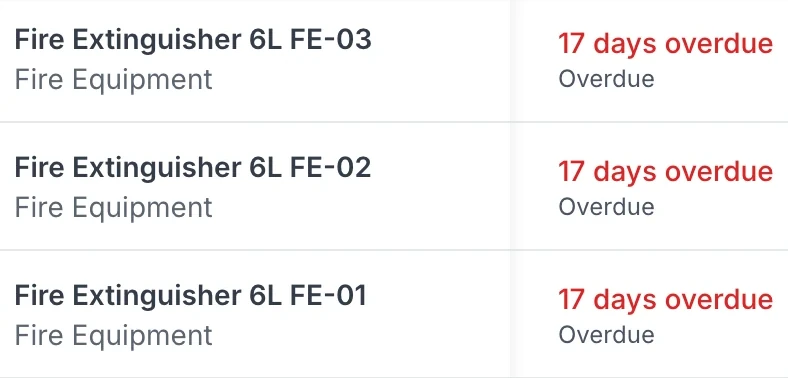
Retain a separate result for every extinguisher
Run the contractor’s visit as one work order while every extinguisher, hose reel and fire blanket keeps its own result and evidence. That matters when nine units pass and the tenth needs replacing.
The short answer
MapTrack keeps each extinguisher, hose reel, fire blanket, first aid kit and AED on its own record, with its location, its schedules, its results and its evidence, whether it sits in a building, on a ute or on an excavator. Your contractor does the AS 1851 work; you keep the register. MapTrack doesn't service, test, inspect or certify fire equipment.

Key takeaways
- One record per unit, with its serial or ID, QR label, photo, location and history, so a swapped extinguisher is an event with a date.
- Put each service level on its own schedule, in months or years: the Service Board shows what's overdue, due soon and on track, and the person assigned gets an email when a check falls due within 7 days.
- Run the contractor's visit as one work order: every unit gets its own pass or fail, so a failed extinguisher isn't hidden in a passed job.
- Keep the contractor's report, tag photo or certificate on the unit, so changing contractor doesn't lose the history.
- First aid kits and AEDs sit on the same register, each with its own record, checks and dates.
What MapTrack covers for each unit
- Register units, not just positionsOne record per extinguisher, reel and blanket
- Label and scanQR labels that open the unit
- Record the check against the unitPass or Fail and photos on a phone
- Work the due list per siteOverdue, due soon and on track
- One work order per roundA pass or fail for every unit
- Sites, vehicles and plantWhere each unit is, and what it’s fitted to
- Contractor reportsReports and tag photos on each unit
- First aid kits and AEDsTheir own records, checks and dates
Trusted by construction, mining and field service teams


















Customer proof
What safety teams say
“I looked at many other systems.. and MapTrack beat them all in every aspect. Can't fault them.”
“MapTrack has completely changed how we track tools and manage compliance across our sites - the admin time we've saved alone has been a game-changer.”
- From the published story: Digital forms with automatic timestamps and asset linking replaced paper records, making compliance documentation instantly retrievable for client or auditor requests.
“Finally we've got everything in one place - I would recommend this platform to anyone.”
- From the published story: Safety audit documentation that previously took 2–3 days to compile can now be retrieved instantly from the platform on any device.
Extinguishers, hose reels and fire blankets on one fire equipment register
MapTrack holds each unit as its own asset, with its location, its service interval, its results and its evidence attached. The same register holds test and tag, calibration and lifting gear, so fire equipment is not its own system with its own spreadsheet.
Portable and wheeled extinguishers
In buildings, workshops, plant rooms and vehicles
- A schedule for each service level, kept separate
- Its own pass or fail in every round
Fire hose reels
On walls and in cabinets across your sites
- Their own schedules and history
- The contractor’s report on the reel it covers
Fire blankets
In kitchens, workshops and plant rooms
- A check on its own schedule
- A result and a photo with every check
Extinguishers on vehicles and plant
Fitted to utes, trucks and excavators
- Held as a sub-asset of the machine
- An extinguisher item on the pre-start
How each unit is labelled and found
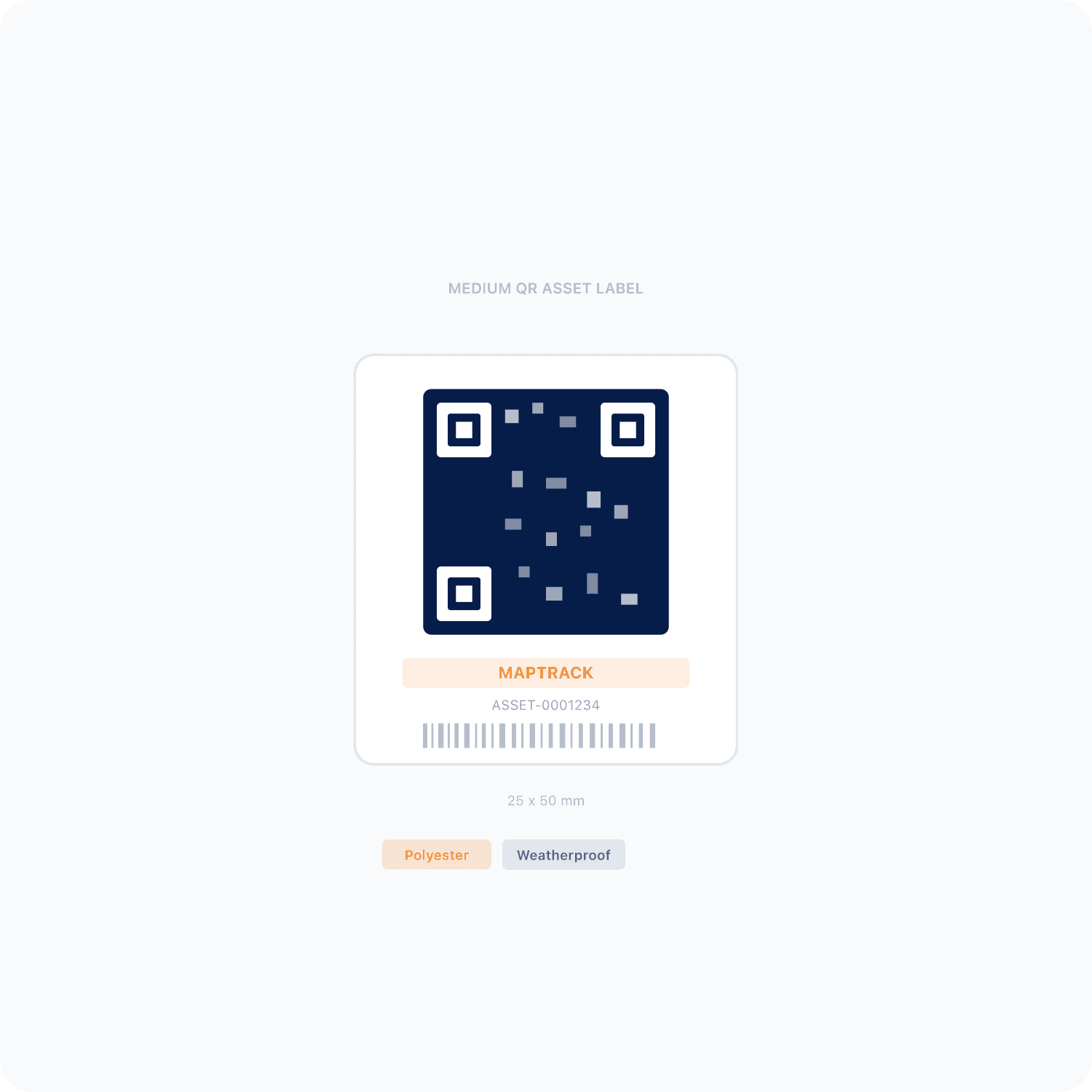
A QR label on the unit opens its record, so a walk-round is a scan rather than a search through a list. Labels suit the extinguishers, hose reels and kits that stay put; a tracker suits an AED case that travels.
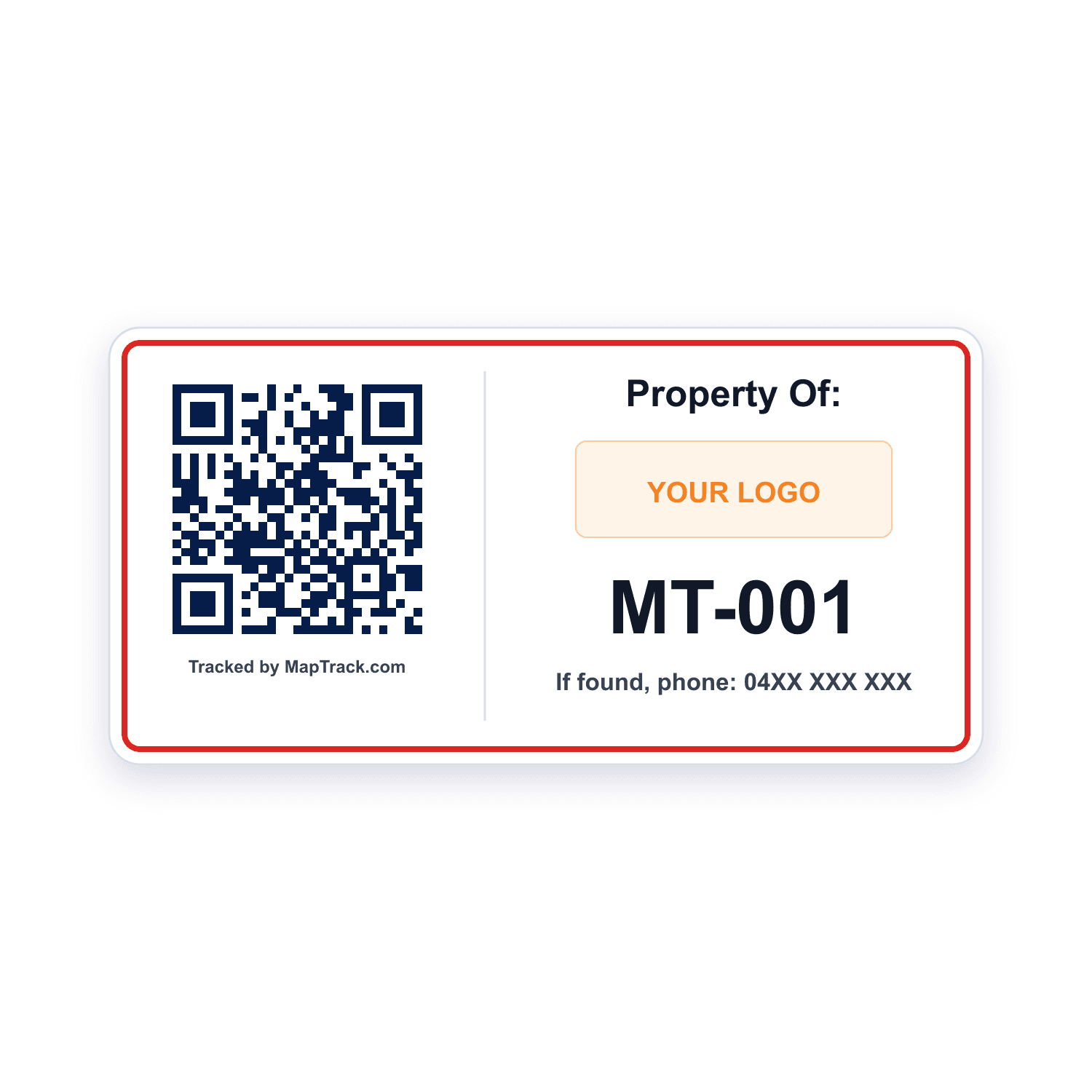
Every extinguisher, hose reel, blanket and kit, for its record, its checks and stocktakes
QR labels
- Scan QR, barcode and Data Matrix labels with the phone camera or a handheld Bluetooth or USB scanner to open the unit's record
- Scan a batch and log the service for all of them at once (needs a connection)
- Print QR labels on a supported Zebra printer
Good to know: A plain scan records no location
Units that already carry a barcode, or small gear that needs a tiny code
Barcode and Data Matrix labels
- Scanned with the phone camera or a handheld Bluetooth or USB scanner
- Ordered from your asset list
Good to know: A plain scan records no location
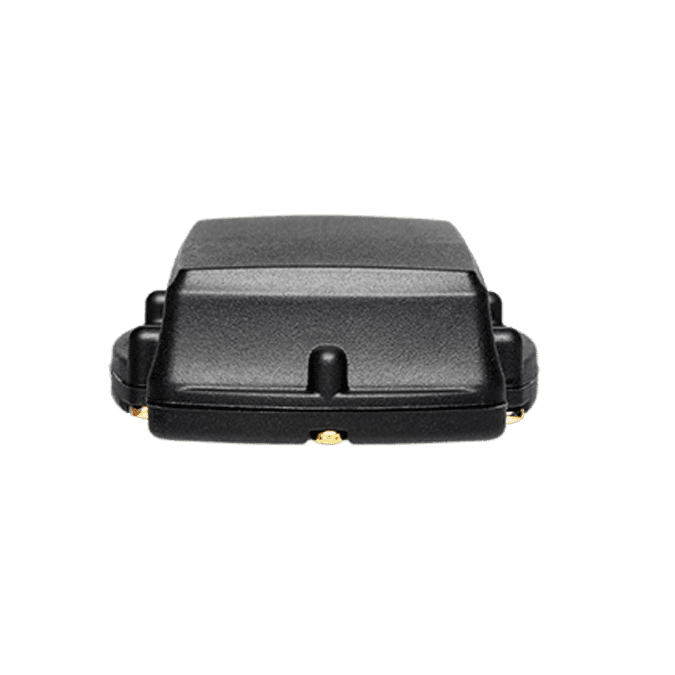
An AED case that travels in a vehicle or between sites
GPS tracker on the AED case
- The case's latest position in MapTrack
- The tracker's own battery level
Good to know: It doesn't read the AED, its battery or its pads.
QR, barcode and Data Matrix labels work anywhere; our GPS trackers ship within Australia and New Zealand.
What it costs
MapTrack is priced per asset, and the plans are on the pricing page. Trackers, QR labels, install and freight are quoted with your order, after a short setup call so each asset gets the right tracker.
A position is not a unit, and audits ask about units
Each extinguisher is an asset with its own identifier, with location as a property of the unit. That is what survives a swap or a fit-out. Because history is per unit, you can see that a position has been through three extinguishers in two years - a signal a date column cannot show.
Location on the record
Its site, building or vehicle, or where a portable unit was last checked out or returned
Serial or ID on the record
Serial or asset ID, type and where it is now, so a swap or a move is recorded rather than overwritten
QR label on the unit
A QR label opens the unit, so checking a building is not a search through a list of positions
Example record
- 6 L extinguisher FE-02, at a site
- last check passed on 2 April 2026
- next check overdue since 2 October 2026
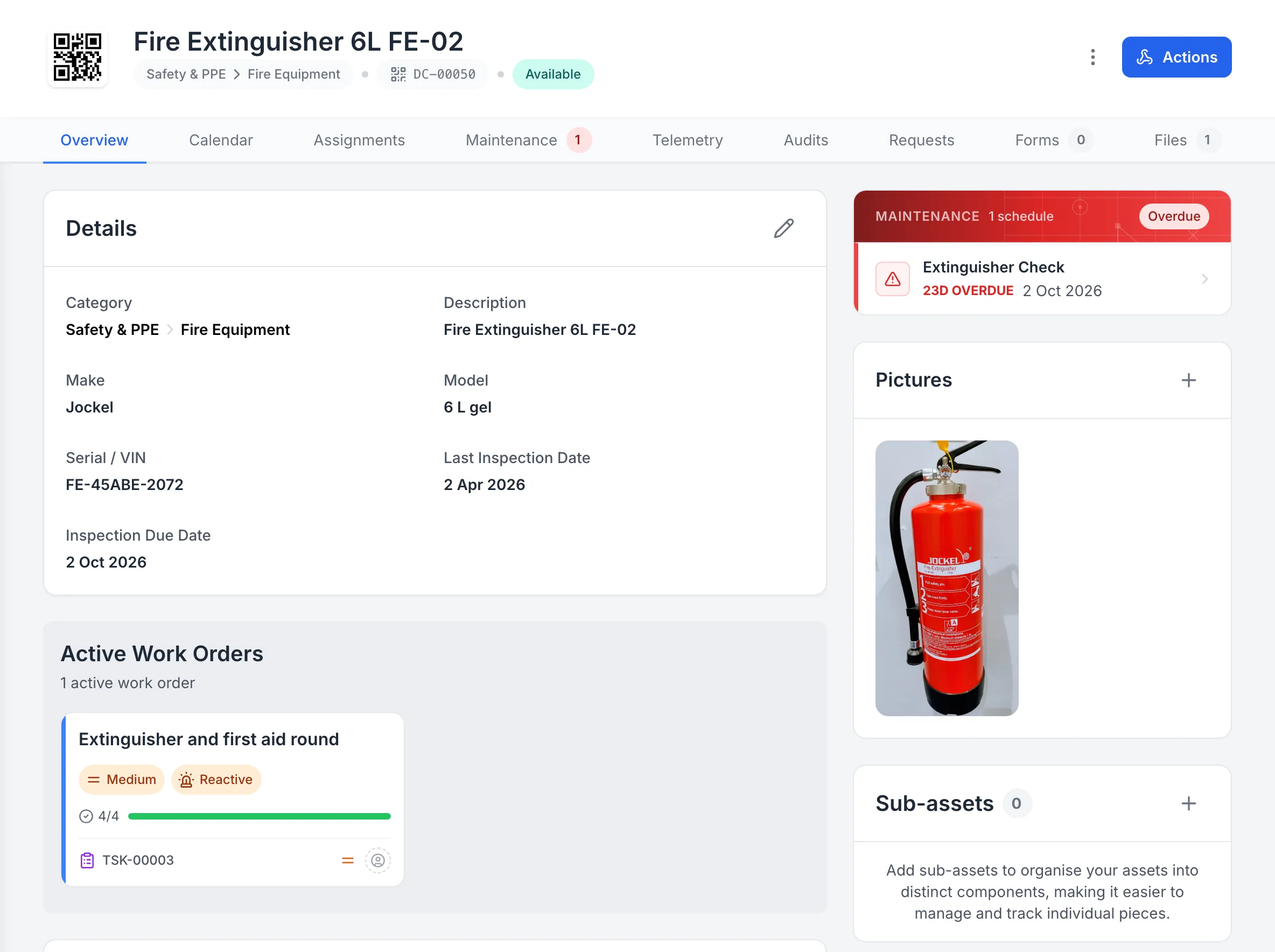
One extinguisher’s record, its check overdue
Extinguisher FE-02’s record: its QR tag, make, model and serial, its last check on 2 April and next overdue since 2 October, and the round it’s on.
MapTrack app · Demonstration data · Captured
About this screenshot
Demonstration workspace at a 1440 px desktop viewport on the extinguisher’s Overview tab, cropped right of the navigation sidebar.
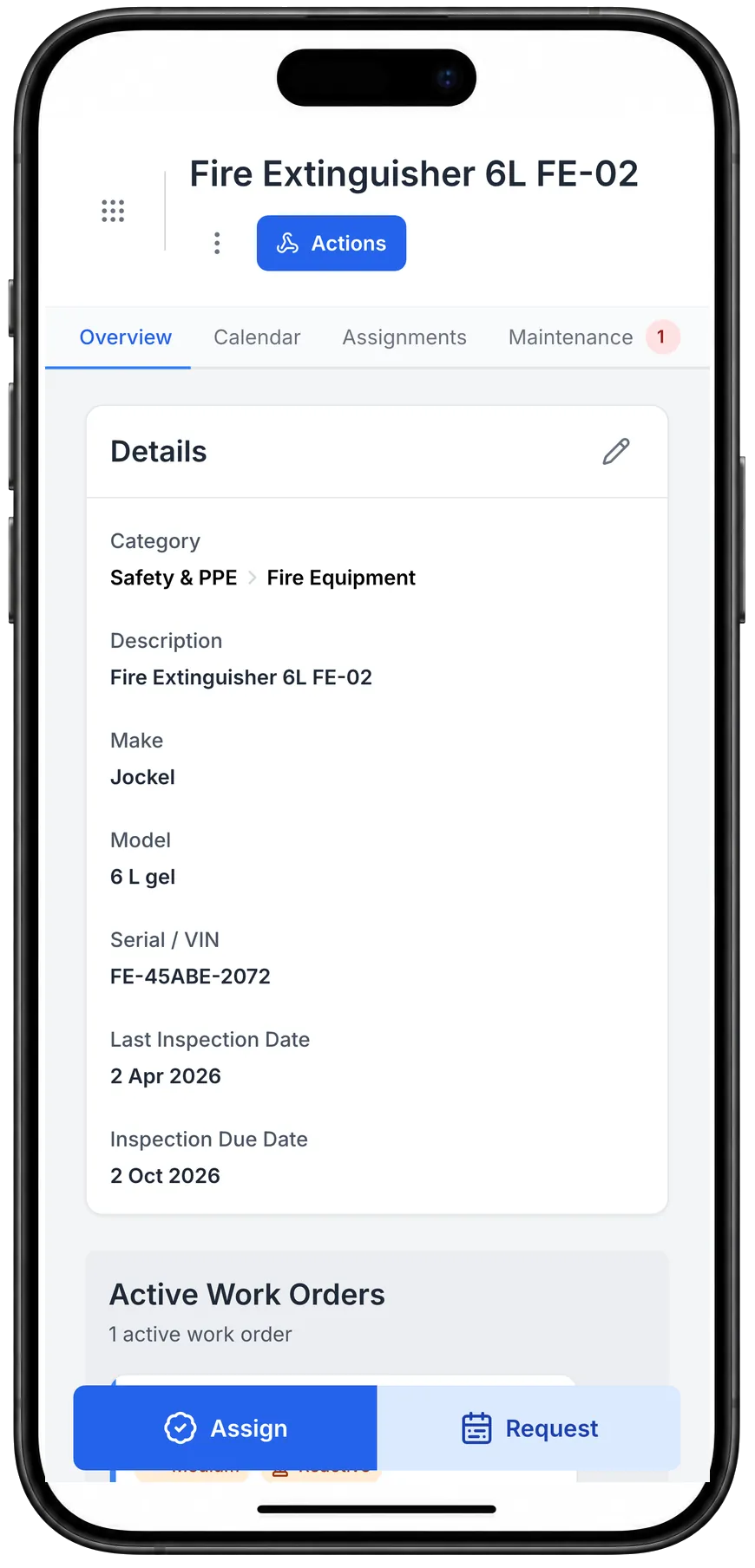
The same extinguisher’s record on a phone
Extinguisher FE-02’s record on a phone, with its inspection dates and the round it’s on.
MapTrack app · Demonstration data · Captured
About this screenshot
Captured at a 430 x 932 phone viewport in a demonstration workspace, on the extinguisher’s Overview tab.
Fire extinguisher inspection schedules and the due list by site
Put each unit on the schedule its standard or contractor sets, in months or years, with a schedule for each service level. Recurring schedules and due alerts produce the round before a contractor attends: the Service Board shows what's overdue, due soon and on track.
- Per unit and per service level, with due and overdue alerts and filtering by site
- Overdue shows first on the Service Board, and the person assigned to the schedule gets an email when a check falls due within 7 days
- Filter by next due and site to produce the round. Due and overdue alerts mean nothing depends on someone remembering.
- A person raises the work order from the schedule in a couple of clicks, for one unit or a batch for the site; a date never raises it on its own
- A routine check and a periodic service have different lead times. One column cannot tell them apart.
- Import the register from CSV or Excel, then attach the reports
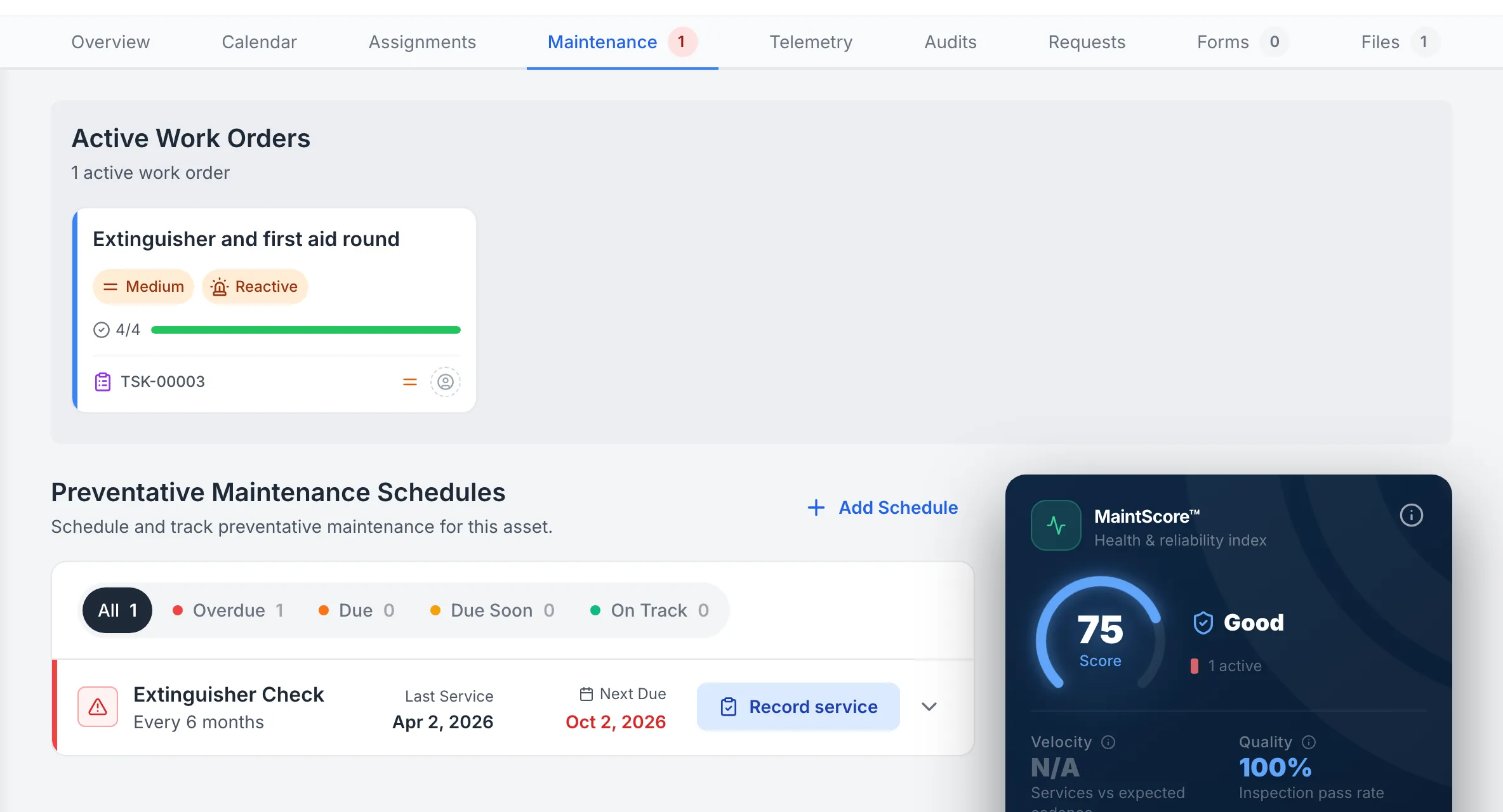
An extinguisher’s check and its round
Extinguisher FE-02’s Extinguisher Check, every 6 months in this workspace, is overdue, and the round that covers it sits above the schedule.
MapTrack app · Demonstration data · Captured
About this screenshot
Demonstration workspace at a 1440 px desktop viewport on FE-02’s Maintenance tab. The 6 month interval is the demonstration workspace’s own schedule, not a standard’s.
AS 1851-2012 sets six-monthly, yearly and five-yearly service for portable fire extinguishers, plus a three-yearly item in clause 10.2.3; six-monthly and yearly service for fire hose reels; and six-monthly service for fire blankets, as Building Commission NSW's good practice guide for implementing AS 1851-2012 (January 2026) sets them out. It has no monthly item: a monthly walk-past is site practice. Which rules apply differs by state and by building, so set each schedule from your own sources and your contractor's advice.
Run the contractor’s round on one work order
Use one work order to organise the site visit while keeping each extinguisher’s location, result and evidence individually retrievable. Each unit on the visit keeps its own pass or fail, so nine passes and a fail never become one passed job.
- Check the unit at the recorded location. Match the extinguisher to its identifier and location before completing its procedure. Record the actual result for that unit, including any replacement or follow-up needed.
- Review the exceptions before handover. Reopen the completed job and inspect each failed or incomplete asset. Arrange the appropriate repair, replacement or retest and retain the evidence on the individual record.
- Export the round’s results when the visit is done
Setup and limits
- Plant rooms, basements and remote sites are exactly where signal fails. Already-loaded forms can be completed offline, and loaded work orders can record per-asset results offline; both sync later. Setup, schedules, adding costs and completing a work order still need a connection.
- Use the procedure and competent person required for the equipment. Recording a result does not itself establish certification or fitness for use.
A fire extinguisher inspection app for the walk-round
Complete checks on mobile and the result lands on the unit rather than in a separate log. Build the check you need: Pass or Fail items for the gauge, the pin and seal, access, signage and damage, with photos and a signature.
- Complete the form on mobile. Result, photo and timestamp attach to that specific item, including a fail or a discharge
- A Fail opens a fault note and photo, and a rule you set can raise a linked corrective task; the original Fail stays beside the repair
- Set a failed or discharged unit’s status to Damaged or Repair, then record the replacement
- Checks submit offline and sync later, and the completed check downloads as a PDF
- Add an extinguisher item to the pre-start for a ute, truck or excavator, so the operator can fail a used or damaged unit on the day
Why a unit-level register beats a position spreadsheet
Fire extinguisher tracking across sites, vehicles and plant
Each unit’s location is its site, building or vehicle, or where a portable unit was last checked out or returned. Hold the extinguisher fitted to a ute, truck or excavator as a sub-asset of that machine, on the same register as the machine.
- Fire equipment, test and tag, calibration and lifting gear on the same system rather than four
- Replacing a unit is an event with a date, not an overwrite of a row that still reads as compliant

The asset register as it opens
Plant, vehicles, tools and safety gear on one register, each with its status, who has it, where it is and its QR tag.
MapTrack app · Demonstration data · Captured
About this screenshot
Demonstration workspace at a 1440 x 900 desktop viewport, the register’s default view, cropped right of the navigation sidebar to a 16:10 frame.
Fire equipment stocktakes and site checks
Stocktake a site, a store or a vehicle by scanning each unit’s label. At the end you choose Mark Missing or Skip All for whatever wasn’t scanned.
- A site check on the location’s own record: exits clear, units in place and signage, with results and follow-up kept
- Stocktakes, check-outs and returns need a connection
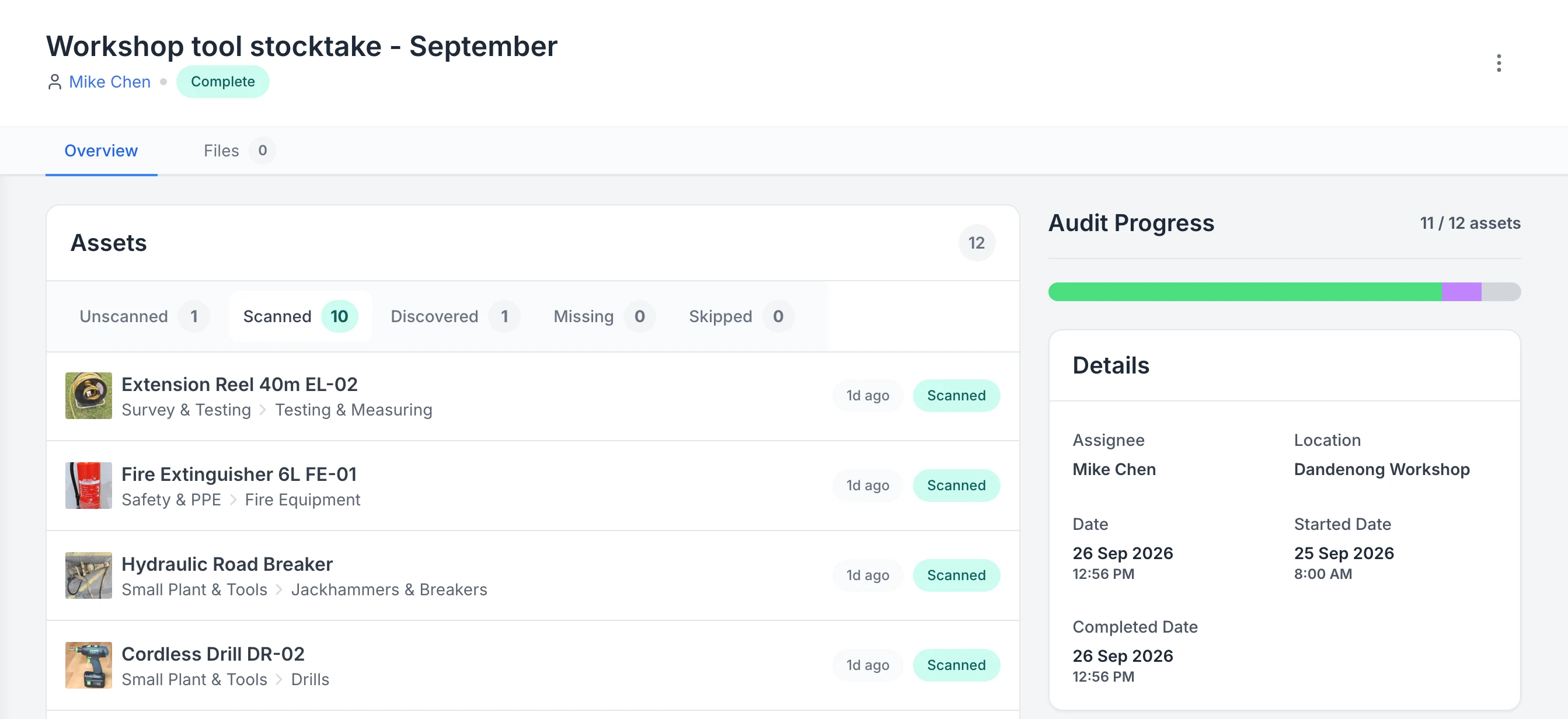
See what a stocktake scanned, discovered and missed
A completed workshop stocktake. Ten listed assets were scanned and one asset that was not on the list was discovered, so progress reads 11 of 12. One asset is still unscanned and none are marked missing.
MapTrack app · Demonstration data · Captured
About this screenshot
Captured in a demonstration workspace on the audit’s Overview tab with the Scanned tab open; its activity log continues below the crop.
Your contractor’s reports and the history on each unit
Record the result (passed, failed or skipped), who did it and when, with notes and files, and the history stays on the unit. The unit and its compliance history stay together, which is what makes the register auditable rather than merely current. Where hazardous chemicals are used or stored, the model WHS Regulations ask that "a dated record is kept of the latest testing results and maintenance until the next test is conducted" (reg 359); a service entry holds the date, who did it, the result and the files.
- Each check with its evidence, plus the contractor service report attached to the item it covers
- The contractor’s report, tag photo or certificate on the unit or its service entry
- The contractor as a vendor, and their invoice as an external cost on the service record
- For fire protection contractors servicing customer sites, see MapTrack for fire safety businesses
First aid kit and AED checks on the same register
SafeWork NSW’s and WorkSafe WA’s first aid codes of practice say to check a kit "after each use or, if the kit is not used, at least once every 12 months", against an inventory list in the kit "signed and dated after each check". Keep each kit on its own record and schedule, with a check for its contents, seals and expiry dates, and log the restock after each use.
- Each AED’s location, serial, battery fitting date and pad expiry date on its record, with a regular check of its status indicator
- Most AEDs run their own self-tests, and St John Ambulance Victoria still says to inspect the unit regularly; MapTrack keeps the dates and your checks, and doesn’t read the AED itself
- Restock supplies as consumable parts with stock per location, issued to a person or a site
- A first aider’s or warden’s training and its expiry on their person record
- Eye wash stations and spill kits on the same register, each with its own record and checks
- First aid kit inspection checklist
- First aid kit checklist
- Eyewash station inspection checklist
- Rescue kit inspection checklist
- For every kit, AED and eye wash station on its own page, see First aid kit and AED inspections

A first aid kit on the same register
A site first aid kit has its own record, with its last and next check dates and the round it shares with the extinguishers.
MapTrack app · Demonstration data · Captured
About this screenshot
Demonstration workspace at a 1440 px desktop viewport on the kit’s Overview tab, cropped right of the navigation sidebar.
Fire equipment registers and records
Free templates for extinguisher checks and tags, the annual inspection and five-year test records, hose reels and the AS 1851 schedule, if you are starting on paper or a spreadsheet.
- Fire extinguisher inspection checklist
- Fire extinguisher inspection tag and record
- Fire extinguisher annual inspection record
- Fire extinguisher 5-year hydrostatic test record
- Fire hose reel inspection checklist
- AS 1851 fire maintenance schedule
The instruments this recordkeeping sits under
Routine service intervals for fire protection equipment, and the records that go with them, are set by the instruments below rather than by MapTrack. We support the digital recordkeeping; the servicing and the compliance judgement stay with your competent person and your servicing contractor. Check local record-retention rules too: buildings covered by the NSW requirements currently need the AS 1851-2012 hard-copy record kept on site.
Check the current source
- Model WHS Regulations (Safe Work Australia)
- AS 1851-2012 record-keeping requirements for building owners (NSW Government)
- AS 1851-2012, Routine service of fire protection systems and equipment (Standards Australia)
MapTrack keeps the records these standards ask you to keep. It does not certify your work or make you compliant, and the current text of each instrument is the authority.
Track every extinguisher, every inspection
Full access to every feature. No credit card required. Per-asset pricing so you scale as your fleet grows.
- No credit card required
Common questions
What is fire extinguisher inspection software?
How often do fire extinguishers need to be inspected?
Which service levels apply to extinguishers, hose reels and fire blankets?
Are extinguishers tracked individually or by location?
Why does a fire equipment register need units, not positions?
Why keep a routine check, a periodic service and a pressure test on separate schedules?
Can we schedule recurring inspections?
What happens when a unit fails a check or is discharged?
Can we see what is due across multiple sites?
Is the evidence good enough for an auditor or insurer?
Does MapTrack replace the hard-copy logbook or our fire safety statement?
Our fire equipment is serviced by an external contractor. Does that still work?
Can extinguishers on utes, trucks and excavators sit with the machine?
Can MapTrack be our first aid kit register too?
Can MapTrack keep our AED checks?
Why is fire equipment hard to prove, even when it's checked?
We're a fire protection contractor. Is this page for us?
How do fire service and facilities management companies track extinguisher servicing across sites?


“Thanks to MapTrack we know exactly where our gear is, who has it and when it needs servicing.”
Denis Slaviero
HSEQ Manager at Hacer Group
Digitise fire safety checks
Join construction, mining and field service teams across Australia.
4.9 on G2 · 5.0 on Capterra, GetApp & Software Advice
- No credit card required