
First aid kit inspections
First aid kit inspection software from ute kits to AEDs
Every kit in every ute and on every site, each AED with its pad and battery dates, and the restock in the store, so the kit's full when someone needs it.

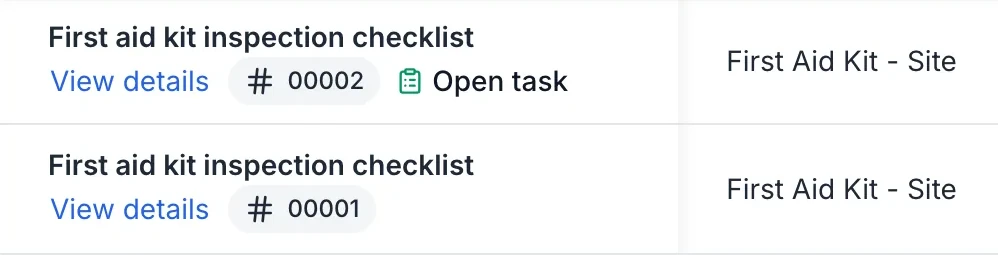
One register for every first aid kit and AED you look after
This is the register for whoever answers for first aid. Each kit in a ute or on a site, each AED and each eye wash station carries its checks and its dates, and the restock sits as stock in each store, issued to whoever refills the kit.
The short answer
MapTrack keeps each first aid kit, AED, eye wash station and spill kit on its own record, with where it lives, its check schedule and its expiry dates. Crews check kits on their phones, the restock is issued from stock in the store or ute, and every check is signed, dated and kept with the kit.

Co-Founder & GM of Operations
Key takeaways
- Each kit, AED, eye wash station and spill kit gets a record of its own, with where it lives, its make, its serial and its next check.
- Check a kit on a phone with MapTrack's First Aid Kit Inspection Checklist; the person checking signs, and the check is dated and kept on the kit.
- Make the ute's first aid kit a required accessory, so each check-out and return confirms it went out and came back.
- Each AED's battery fitting and pad expiry dates sit on its record, with a regular check of its status indicator.
- Keep restock supplies as stock in each store, ute or site box, with minimums, and issue them to whoever refills the kit.
What MapTrack keeps for every kit and AED
- Every kind of kitSite, vehicle, trauma kits and AEDs
- Checks on a phoneSigned, dated, with a photo of a Fail
- Check schedulesDue soon, overdue and a 7-day email
- AEDsBattery and pad dates, status checks
- A kit in every uteConfirmed out and back
- Restock suppliesStock per store, ute and site box
- First aidersTraining and its expiry on their record
- Eye wash stations and spill kitsTheir own records and checks
Trusted by construction, mining and field service teams

















Customer proof
What safety teams say
“Thanks to MapTrack we know exactly where our gear is, who has it and when it needs servicing.”
“MapTrack has completely changed how we track tools and manage compliance across our sites - the admin time we've saved alone has been a game-changer.”
- From the published story: Digital forms with automatic timestamps and asset linking replaced paper records, making compliance documentation instantly retrievable for client or auditor requests.
“Finally we've got everything in one place - I would recommend this platform to anyone.”
- From the published story: Safety audit documentation that previously took 2–3 days to compile can now be retrieved instantly from the platform on any device.
Site kits, vehicle kits, AEDs and trauma kits on one register
Kits, AEDs and the rest go in as records, one by one or imported from a spreadsheet and bulk edited after; restock supplies go in as stock lines in the app. They sit in the same register as the vehicles, plant, tools and fire equipment the same crews look after, so whoever answers for first aid keeps one system.
Site first aid kits
Wall and cabinet kits in offices, workshops and site sheds
- Its own record, schedule and check
- The contents list in its Files tab
Vehicle and plant kits
Kits in utes, trucks and machine cabs
- A required accessory of the vehicle it's in
- Checked on its own schedule, like the site kits
AEDs
Defibrillators in cabinets, on walls and in cases
- Battery fitting and pad expiry dates on its record
- A regular check of its status indicator
Trauma and remote-area kits
Portable kits that go out with a crew
- Checked out to a person, a location or both
- Booked ahead for a shutdown or an event
Eye wash stations
Plumbed stations and portable units
- Checked with the Eyewash Station Inspection Checklist
- Their own record and schedule
Spill kits
Kits beside the fuel and chemicals they serve
- Checked with the spill response checklist
- Absorbent topped up from the store
Each kit and AED on a record of its own
A site kit, a ute kit and an AED each have a place, a maker and dates of their own, so each gets a record: what it is, where it lives, its make, model, serial, label and status, and its last and next check dates, with its forms, files and history a tab away.
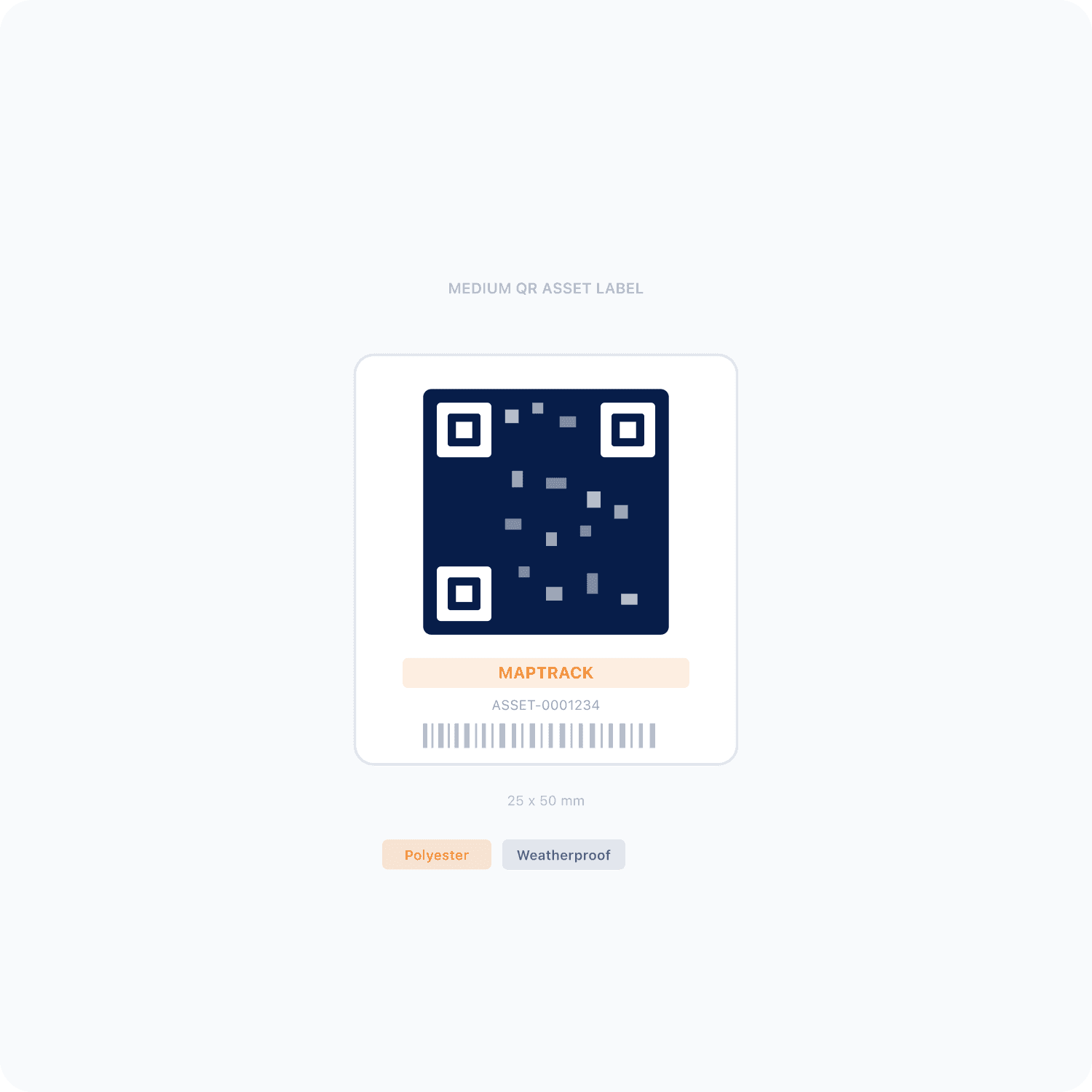
Its QR label
Scan it to open the kit's record and its checks
Where it lives
The site, the ute or the machine cab it's kept in
Who checked it
The first aider who signed the last check, and when
Example record
- First Aid Kit - Site, a St John Workplace Kit, serial FAK-0419
- last inspection 1 August 2026, next due 1 November 2026
- on the same round as the extinguishers, 4 of 4 done
Each check
First aid kit checks on a phone, signed and dated
Scan the kit's label and check it with MapTrack's First Aid Kit Inspection Checklist on a phone, a ready-made form in the app. A Fail opens a note and a photo of what was found, and a rule you set up can raise a linked corrective task. The person checking signs on the phone, and the signature and any fault photo are saved with the submission and printed on its PDF, so the signed and dated record is the form itself.
- The completed check downloads as a PDF that keeps its Pass and Fail colours
- A submitted check records where it was submitted, as a map pin and street address
- A form can suggest the site the phone is inside as a one-tap "You are here"
- A repeat report of a failed check can be added to the job it already raised
- Checks submit offline and sync once the phone has reception
Setup and limits
- The first aider does the check; MapTrack records it.
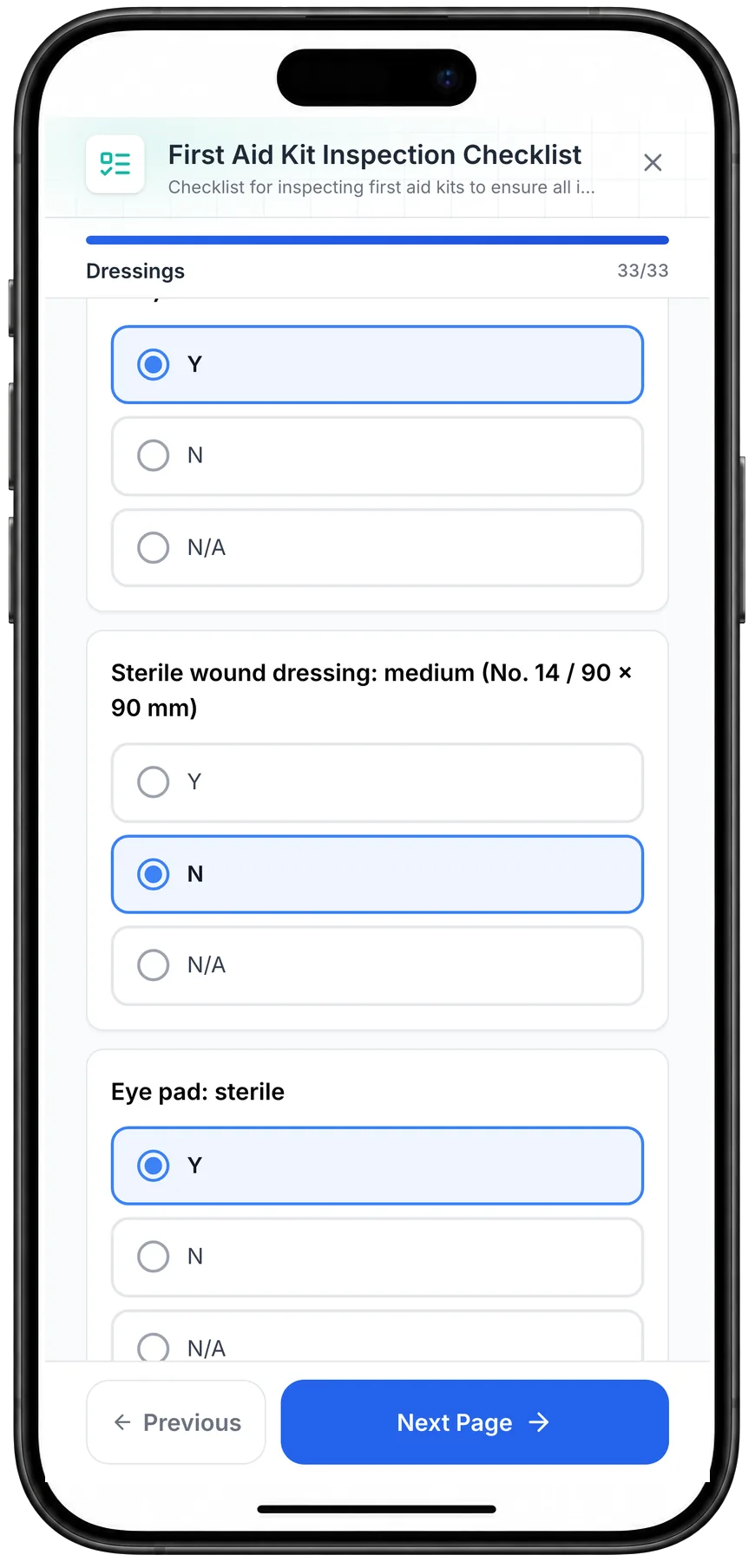
A first aid kit check on a phone, an item missing
Checking a site kit on a phone: the medium wound dressing answered N, as missing, among the dressings.
MapTrack app · Demonstration data · Captured
About this screenshot
Captured at a 430 x 932 phone viewport in a demonstration workspace, on the kit’s check before it was submitted.
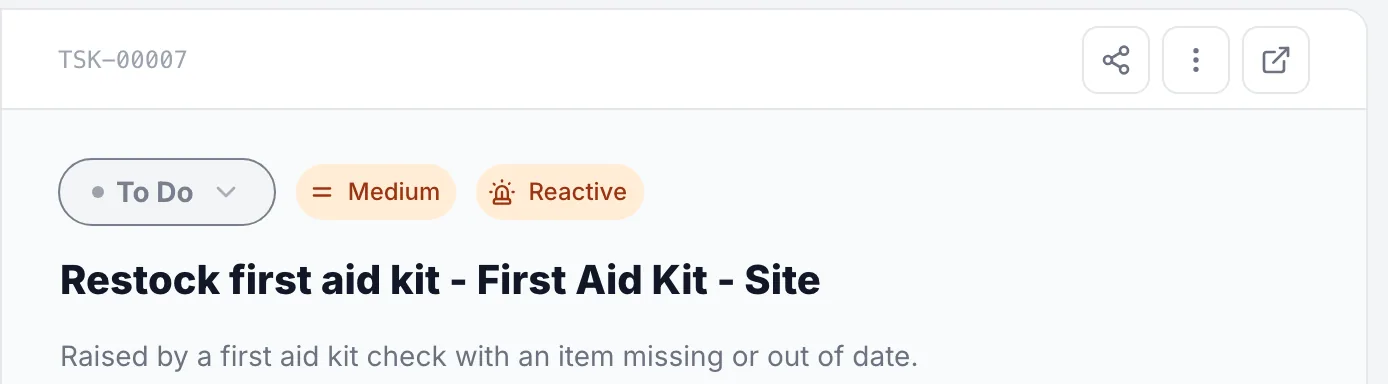
The restock task a failed kit check raised
The restock task a rule set up in this workspace raised from the kit’s check, a few minutes after it was submitted.
MapTrack app · Demonstration data · Captured
About this screenshot
Demonstration workspace at a desktop viewport on the task’s panel, cropped to its header.
Due dates
Check schedules for every kit and AED, and what's due by site
Put each kit and AED on a check schedule at the interval your code or first aider sets. The Service Board shows what's overdue and due soon across every site and ute, and the person assigned to the schedule gets an email when a check falls due within 7 days.
- A kit's expiry date and an AED's battery and pad dates sit on its record as fields, beside its schedule
- A person raises the round from the schedule as one work order, for one kit or every kit on a site; a date never raises it on its own
- Check a site's kits, AED and eye wash station on one work order, each with its own pass or fail, alongside the extinguishers if you like
Setup and limits
- The due list, the 7-day email and the check-out flag come from the check schedule, so put each kit and AED on one.
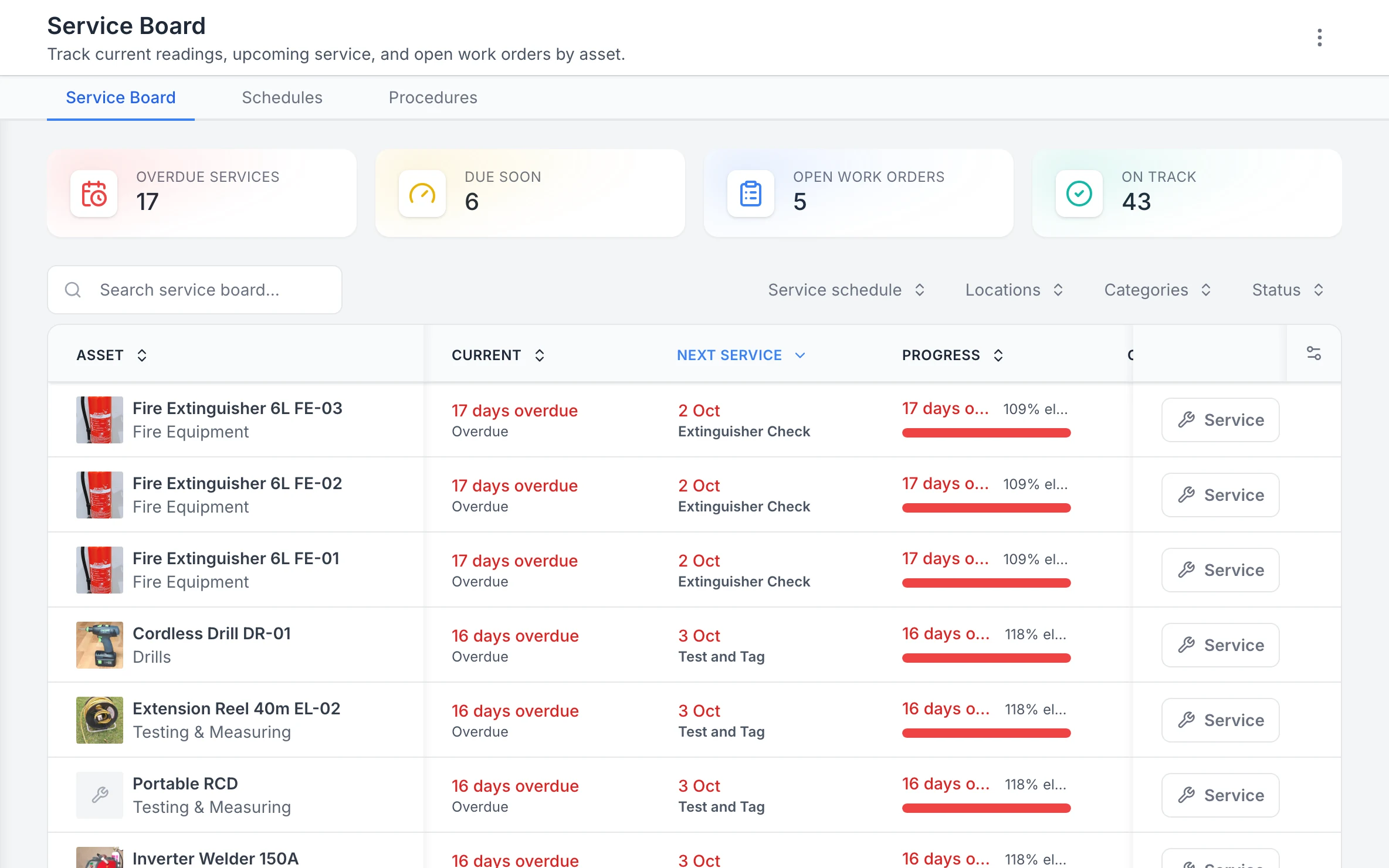
The Service Board, overdue first
Every asset’s next service in one list, the overdue ones first, with a Service button on each row.
MapTrack app · Demonstration data · Captured
About this screenshot
Demonstration workspace at a 1440 x 900 desktop viewport, cropped right of the navigation sidebar to a 16:10 frame.
In Australia the model Code says after each use or at least every 12 months, and Victoria's compliance code says quarterly; set the schedule to the one that applies, or tighter. MapTrack doesn't set it.
AEDs
AED maintenance records: the battery and pad dates, and every check
Each AED's location, serial, battery fitting date and pad expiry date go on its record, and a form on the phone records each regular check of its status indicator. In Australia, the model first aid Code says to consider providing an AED where there's a risk of electrocution, a delay in an ambulance arriving or many members of the public, clearly signed, accessible and maintained according to the maker's instructions. In Australia, Victoria's compliance code adds "including replacing batteries and pads at the specified intervals". In Great Britain, the HSE says health and safety law doesn't require an AED at work. St John Ambulance Australia's AED maintenance checklist records the location, make, model and serial, the date the battery was installed and the date the pads expire, the same dates MapTrack keeps on the record.
- Each AED's location, serial, battery fitting date and pad expiry date on its record, with a regular check of its status indicator
- Most AEDs run their own self-tests, and St John Ambulance Victoria still says to inspect the unit regularly; MapTrack keeps the dates and your checks, and doesn't read the AED itself
- Build the AED check as a form with St John's items: the status indicator, the battery in date, the pads sealed and in date, and the unit free of damage
- The maker's instructions and each battery or pad replacement record in the AED's Files tab
- A GPS tracker on an AED case that travels shows the case's latest position and the tracker's own battery level, never the AED's
Setup and limits
- MapTrack keeps the dates and your checks and doesn't read the AED, its self-tests, battery or pads.
- The maker sets battery and pad life, and the code or your first aid assessment sets the interval.
- In Australia, if your state runs a public AED register (NSW, Victoria, Queensland, South Australia and St John Ambulance keep them), register each unit there too; MapTrack is your own record.
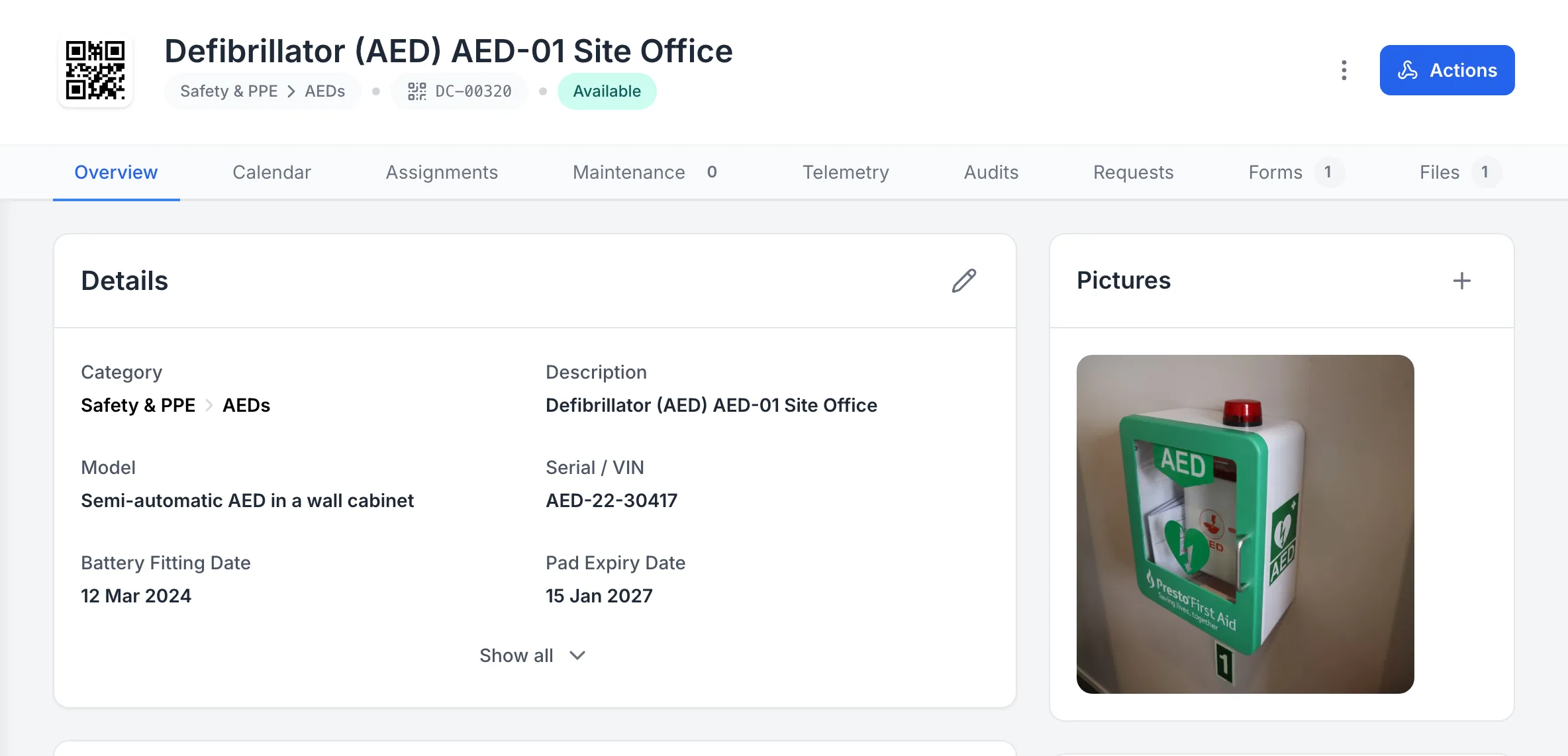
An AED’s record, with its battery and pad dates
AED-01’s record: where it lives, its serial, and its battery fitting and pad expiry dates as fields.
MapTrack app · Demonstration data · Captured
About this screenshot
Demonstration workspace at a 1440 px desktop viewport on the AED’s Overview tab, cropped right of the navigation sidebar.
Utes, sites and events
A first aid kit in every ute, confirmed out and back
Make the ute's first aid kit a required accessory of the vehicle. Each check-out and return of the ute then confirms the kit went out and came back, with a reason when it didn't. Check a trauma kit or a portable AED out to a person, a location or both, with a due-back date if you want one, and book one ahead for a shutdown or an event with Requests, approved and handed over by scan. In Australia, the codes say a portable first aid kit should be in the vehicles of mobile workers whose vehicle is their workplace, and Victoria's compliance code names portable kits in motor vehicles for travelling and mobile workers.
- A kit or AED with an overdue check is flagged when someone checks it out, and going ahead is logged; Damaged and written-off kits are blocked at check-out
- An overdue check-out gets a reminder email
- Audit a site or a ute: scan each kit, AED and eye wash station, then choose Mark Missing or Skip All for anything not scanned
- A kit's place on the map is its GPS fix if it has a tracker, else where it was last checked out or returned
- A site office tablet shared by the crew, each with their own 4-digit PIN
Setup and limits
- Check-out, returns, audits, Requests and issuing or receiving stock need a connection.
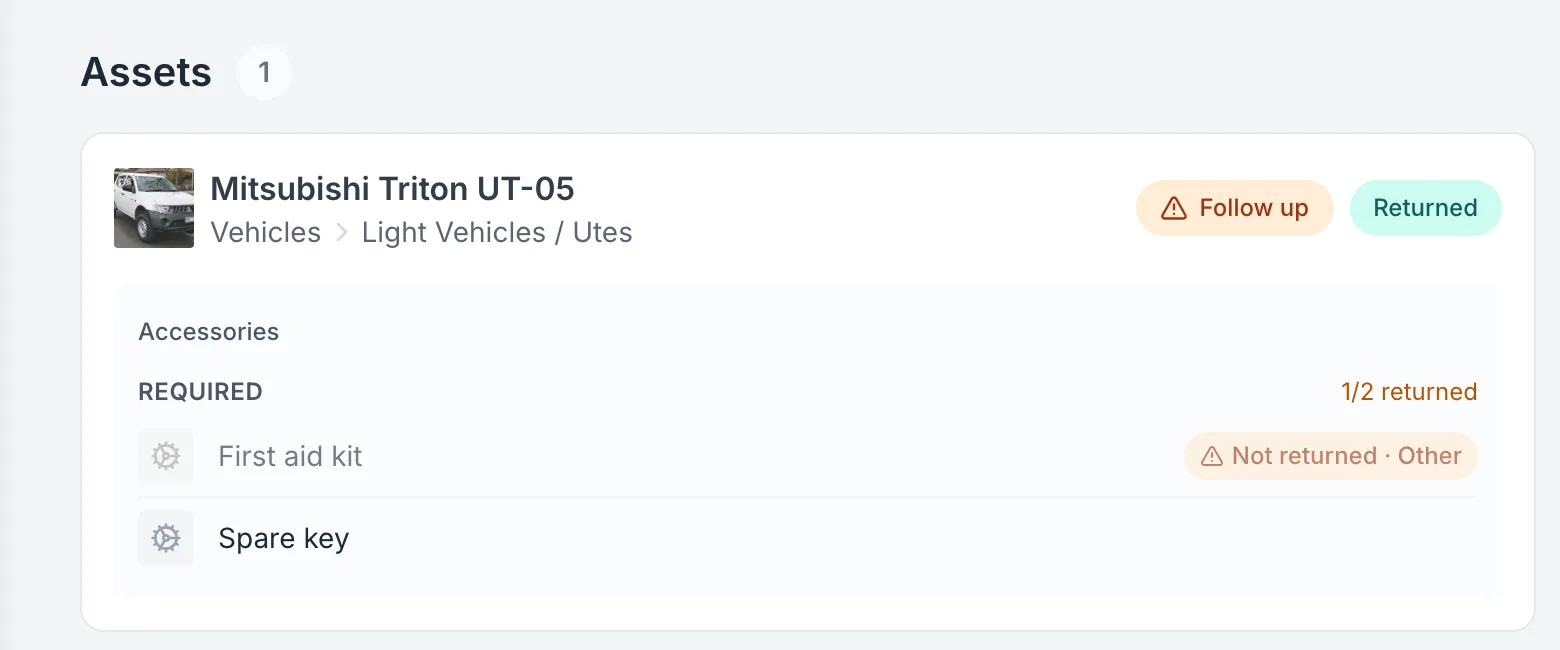
A ute back without its first aid kit
A ute returned with its required first aid kit marked Not returned, with a reason, so the return is flagged for follow-up.
MapTrack app · Demonstration data · Captured
About this screenshot
Demonstration workspace at a desktop viewport on the ute’s assignment, cropped to its Assets card.
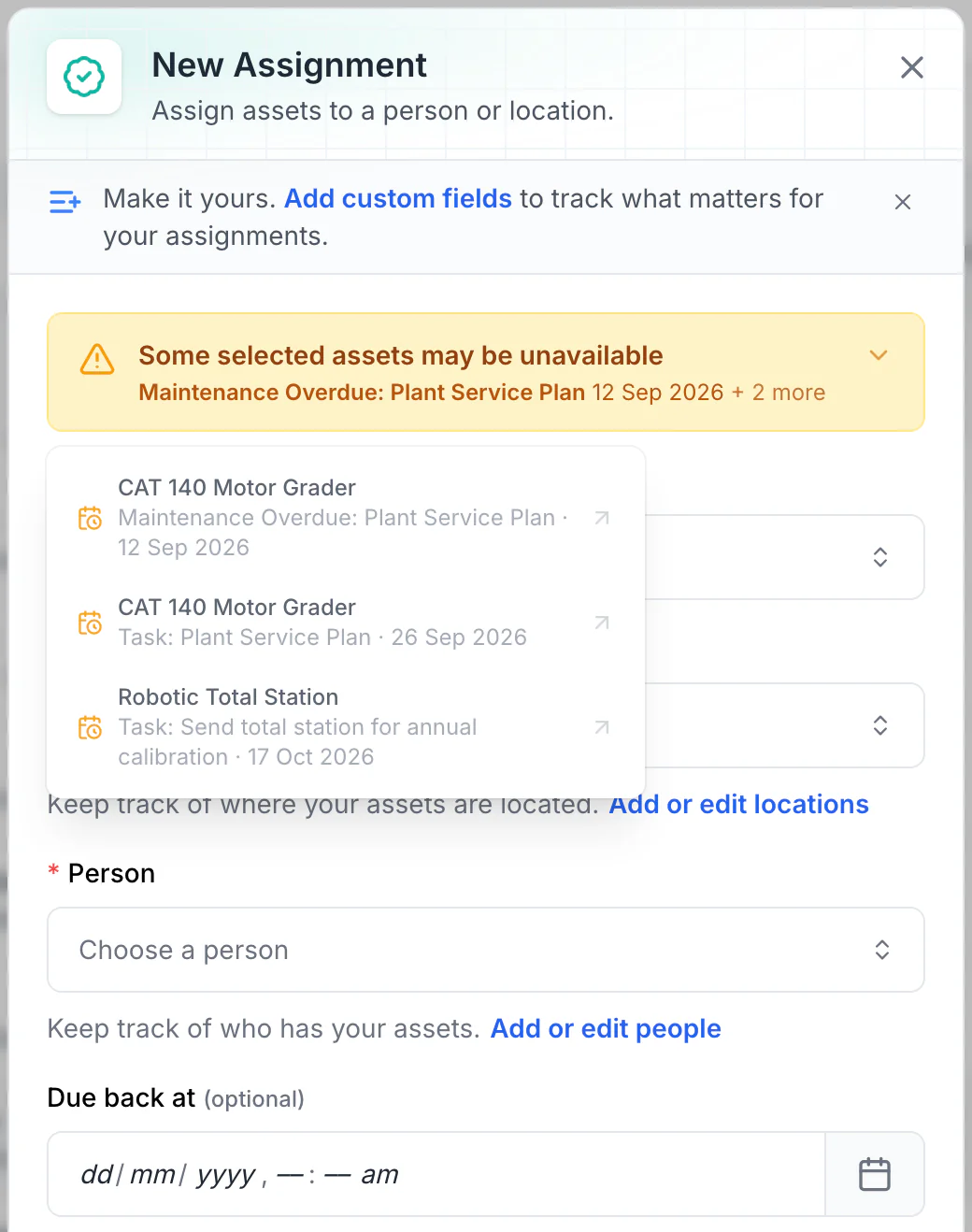
Read the warnings before issuing equipment
Overdue maintenance and scheduled tasks show as amber warnings. No due-back date is set here, so every upcoming conflict is listed. With a due-back date, only tasks before it are listed: a 15 October due-back leaves out the total station’s 17 October calibration.
MapTrack app · Demonstration data · Captured
About this screenshot
Demonstration workspace. Two assets selected and Assign opened; the form was not saved.
Supplies
Dressings, gloves and absorbent as stock in each store, ute and site box
Keep dressings, gloves, eye wash pods and spill absorbent as stock in each store, ute or site box, each a location in MapTrack, with minimum and maximum levels. The list flags a line that runs below its minimum. Issue supplies to the person or site restocking a kit, and receive new stock into the store when it arrives; every receive, issue, return and count stays in the part's history.
- Restock supplies as consumable parts with stock per location, issued to a person or a site
- A ute set up as its own location shows its stock on that location's own list
- Consumables can also go out and come back on a check-out
Setup and limits
- Restock stock lines are added in the app; spreadsheet import covers kits, locations and people, not stock.
- For parts and consumables beyond first aid, see inventory and parts management
- Inventory in MapTrack
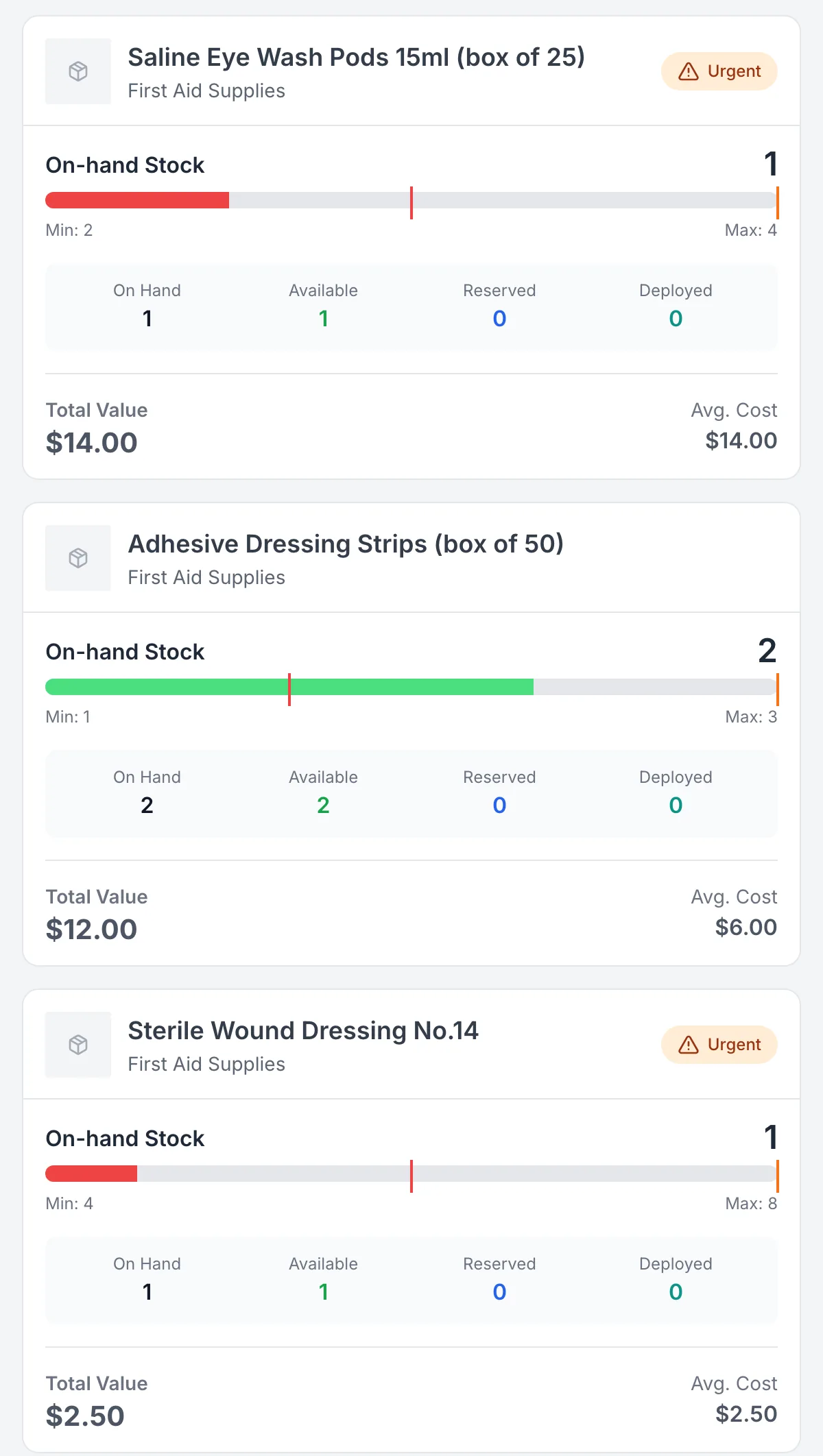
First aid supplies as stock, flagged when low
Eye wash pods, dressing strips and wound dressings held as stock with a minimum and maximum; two lines below their minimum are flagged Urgent.
MapTrack app · Demonstration data · Captured
About this screenshot
Demonstration workspace on a location’s Parts/Inventory tab, cropped to the first three stock cards.
People and paperwork
First aiders' records, and each kit's paperwork on the kit
Keep a first aider's or warden's training and its expiry on their person record, with the certificate in Files. Keep each kit's contents list, the AED maker's instructions and its service records on the record they belong to, so the paperwork sits with the kit it describes.
- A first aider's or warden's training and its expiry on their person record
- Bulk import kits, AEDs, locations and people from a spreadsheet, then bulk edit them
- Kits and AEDs sit in the same register as the vehicles, plant, tools and fire equipment
Setup and limits
- Your training provider trains first aiders; MapTrack keeps the record of it.
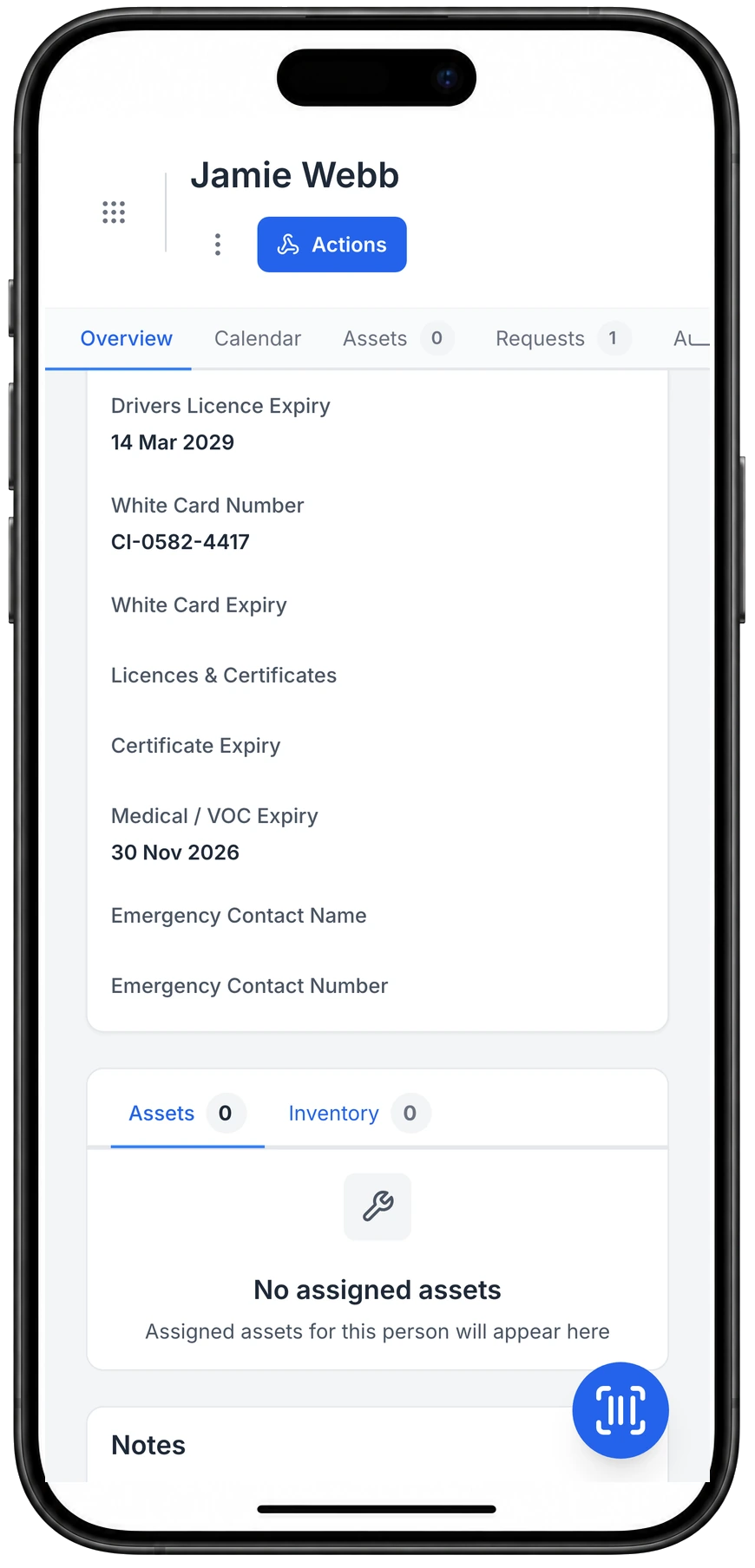
Licence, white card and VOC dates on the person’s record
Licence, white card and medical or VOC dates live on the person's record, next to the gear they hold.
MapTrack app · Demonstration data · Captured
About this screenshot
Demonstration person with three values entered on 23 Oct 2026; the fields are custom person fields set up in this workspace.
QR labels on every kit, AED cabinet and eye wash station
A QR, barcode or Data Matrix label goes on each first aid kit, AED cabinet, eye wash station and spill kit, and a scan with the phone camera or a handheld Bluetooth or USB scanner opens its record. Labels suit the kits that stay put on a site wall or in a ute canopy. A GPS tracker suits only an AED case that moves between vehicles and sites.
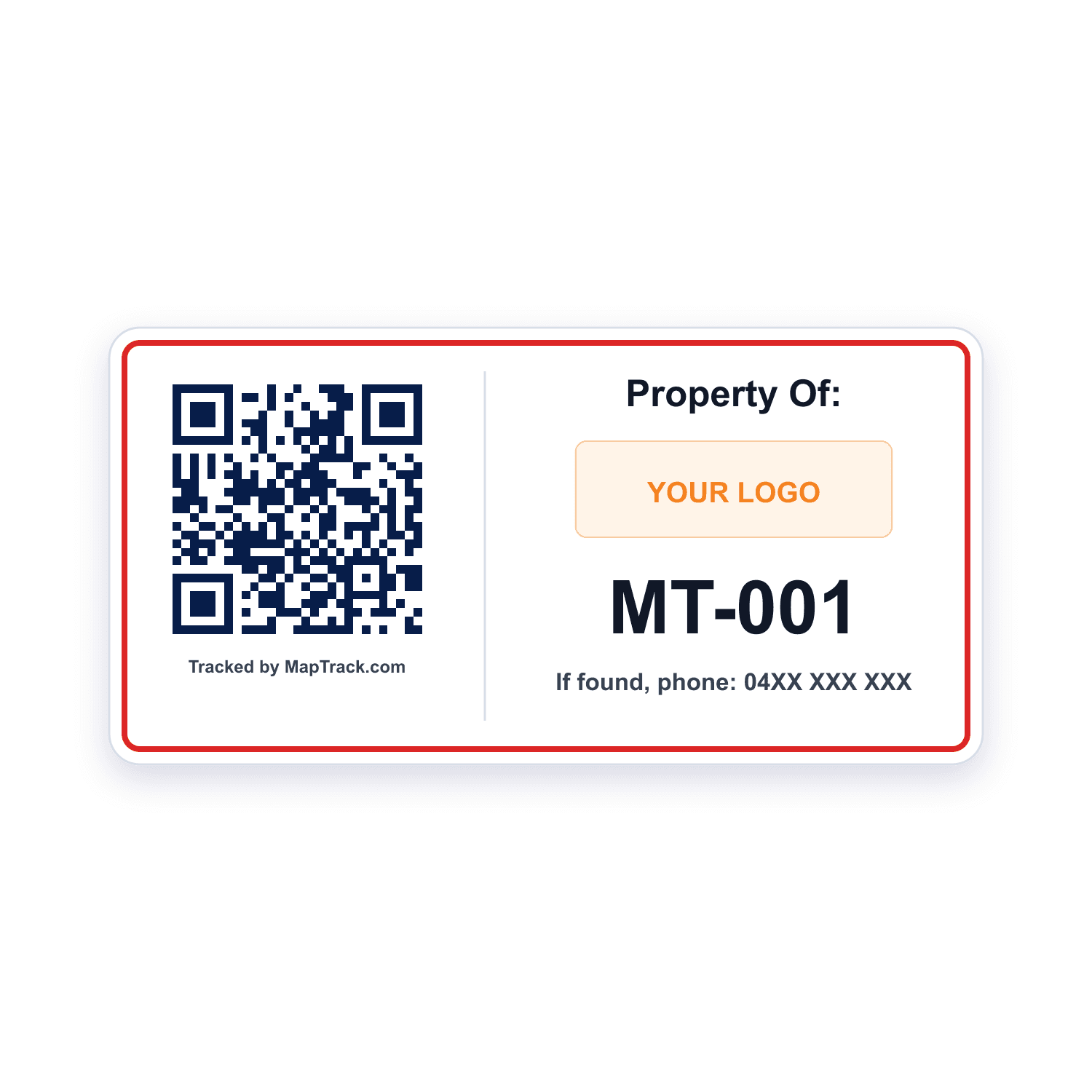
Every first aid kit, AED cabinet, eye wash station and spill kit
QR labels
- A scan opens the kit's record, its last check and its next one
- Print QR labels in bulk in MapTrack, or order durable labels from the label store
Good to know: A plain scan records no location
Kits and units that already carry a barcode
Barcode and Data Matrix labels
- Read by the same phone camera or handheld scanner as the QR labels
- No label to scan? Find the kit in the register by its serial or tag
Good to know: A plain scan records no location
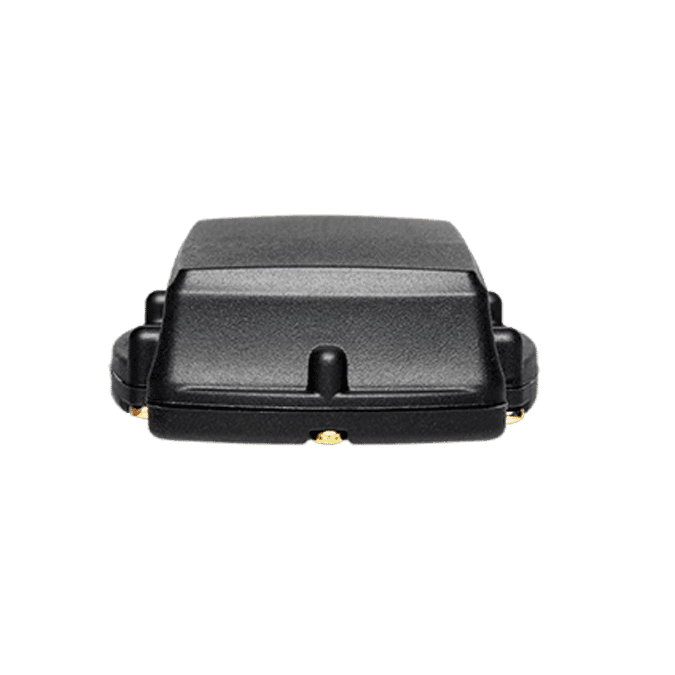
An AED case that travels in a vehicle or between sites
GPS tracker on the AED case
- The case's latest position in MapTrack
- The tracker's own battery level
Good to know: It doesn't read the AED, its battery or its pads.
QR, barcode and Data Matrix labels work anywhere; our GPS trackers ship within Australia and New Zealand.
What it costs
MapTrack is priced per asset, and the plans are on the pricing page. Trackers, QR labels, install and freight are quoted with your order, after a short setup call so each asset gets the right tracker.
Eye wash and spills
Eye wash stations and spill kits, each with its own check
Eye wash stations and spill kits on the same register, each with its own record and checks. Check an eye wash station with MapTrack's Eyewash Station Inspection Checklist on a phone, and a spill kit with the spill response checklist, both ready-made forms in the app. In Australia, the model Code says emergency eye wash equipment should be provided where hazardous chemicals or infectious substances could injure eyes, and portable units refilled or replaced after use.
- A plumbed station, a portable unit or a spill kit beside the fuel bay, each with its own QR label
- Eye wash pods and spill absorbent held as stock and issued from the store
- Their checks on the same due list as the site's first aid kits
Setup and limits
- The person checking decides whether a station or kit is ready for use; MapTrack records the check.
- For the station check on paper, see the eyewash station inspection checklist
- and for a spill kit, the spill response checklist
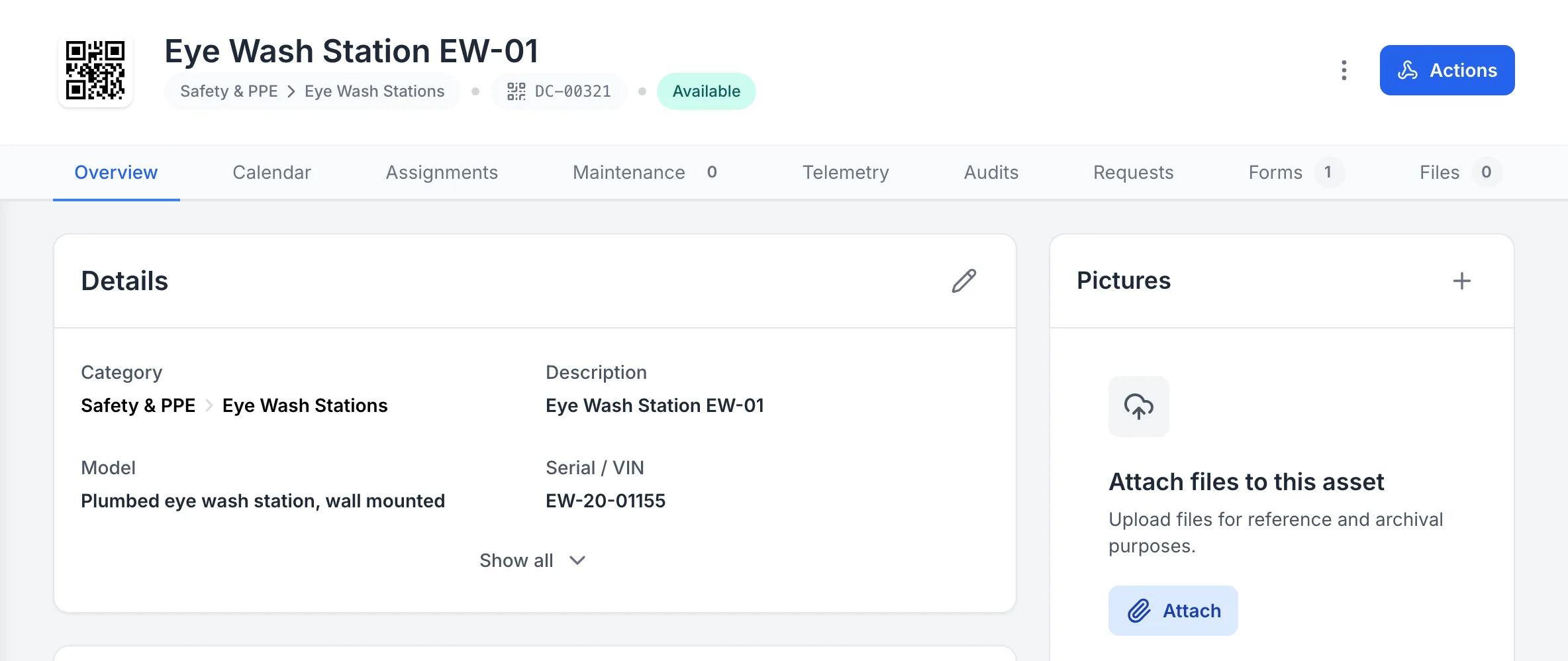
An eye wash station on its own record
Eye wash station EW-01 on its own record, with its model, serial and QR tag.
MapTrack app · Demonstration data · Captured
About this screenshot
Demonstration workspace at a 1440 px desktop viewport on the station’s Overview tab, cropped right of the navigation sidebar.
The rules
What the first aid codes ask for in Australia, Great Britain and the US
In Australia, regulation 42 of the model WHS Regulations requires first aid equipment and access to it, and the codes of practice carry the detail. In Australia, the model first aid Code of Practice, and Queensland's, NSW's and WA's codes, say to check a kit after each use or, if it isn't used, at least once every 12 months, with the inventory list in the kit signed and dated after each check, and to confirm items are in working order, within their expiry dates and that sterile products are sealed. In Australia, Victoria's compliance code says kits should be checked quarterly and after every event requiring first aid. In Great Britain, the HSE sets no specified review timetable for a kit: replace items by their expiry dates and stock it to your first aid needs assessment. In the US, OSHA's 29 CFR 1910.151 asks for adequate first aid supplies readily available, and for eye and body flushing facilities where corrosive materials are used.
- Each kit and unit, where it lives, and every check with who signed it and when
- What failed and what happened next, on the kit it was found on
- Each AED's battery and pad dates, and the restock issued
- Each first aider's training, ready when someone asks to see it
Setup and limits
- In Australia, Victoria runs its own Occupational Health and Safety laws rather than the model WHS laws, so check WorkSafe Victoria's compliance code there.
- MapTrack keeps the records; it doesn't decide what the law asks of you.
How it works
1. Add each kit, AED, eye wash station and spill kit
Add each one with its location and its dates, and put a QR label on it.
2. Make the kit a required accessory of each ute
Each check-out and return of the ute then confirms the kit went out and came back.
3. Put the kits on a check schedule
Set the interval your code or first aider sets, and assign a first aider to get the 7-day email.
4. Check on the phone, sign and restock
Check the kit with the First Aid Kit Inspection Checklist, sign it, and issue the restock from the store.
Free first aid kit, eye wash and spill kit records
MapTrack's First Aid Kit Inspection Checklist, a printable First Aid Kit Checklist, the Eyewash Station Inspection Checklist and the spill response checklist. Print any of them; the First Aid Kit Inspection Checklist, the Eyewash Station Inspection Checklist and the spill response checklist also run on the phone in MapTrack.
Where the first aid rules come from
How often a kit is checked, what it holds and whether a workplace has an AED are set by the codes and rules below, and they differ by country and, in Australia, by state. MapTrack keeps the records; whether a kit and its check suit the work stays with you, your first aider and the maker's instructions.
Check the current source
- Code of practice: First aid in the workplace (SafeWork NSW, July 2015, based on Safe Work Australia's model Code)
- Model WHS Regulations (Safe Work Australia)
- Compliance code: First aid in the workplace (WorkSafe Victoria, 2021)
- OSHA 29 CFR Part 1910, Occupational Safety and Health Standards
- OSHA 29 CFR 1910.151, Medical services and first aid
- Frequently asked questions on first aid (HSE, Great Britain)
MapTrack keeps the records these standards ask you to keep. It does not certify your work or make you compliant, and the current text of each instrument is the authority.
Common questions
Can MapTrack be our first aid kit register?
How often should a first aid kit be checked in Australia?
Can we keep our AED checks in MapTrack?
Does MapTrack read the AED's self-test or tell us when the pads expire?
Is MapTrack AED management software?
Do we still register our AED with the ambulance service?
How do we keep a first aid kit in every ute?
Can we check the kits, the AED and the extinguishers in one round?
How do we keep track of restock supplies?
What happens when a first aid check fails?
Can our first aiders' training go in too?
Do eye wash stations and spill kits fit?
Can we put a GPS tracker on an AED case?
Do first aid checks work without signal?
How do we label first aid kits?
Can we audit a site's first aid gear?
How often should a first aid kit be checked in Great Britain?
What do the US rules say about first aid kits and eye wash?
Who is MapTrack's first aid register built for?
Does MapTrack inspect or certify our first aid kits?


“Thanks to MapTrack we know exactly where our gear is, who has it and when it needs servicing.”
Denis Slaviero
HSEQ Manager at Hacer Group
See your first aid kits and AEDs in MapTrack
Book a demo to walk through first aid kit inspections in MapTrack, from the kit in a ute to the AED on a site wall and the restock in the store, or start with the free first aid records.