
QR code asset tracking software
Link each asset to a QR code, identify it from a supported phone or tablet, and open the connected record for deliberate custody, inspection and maintenance actions.
Print QR labels for every asset
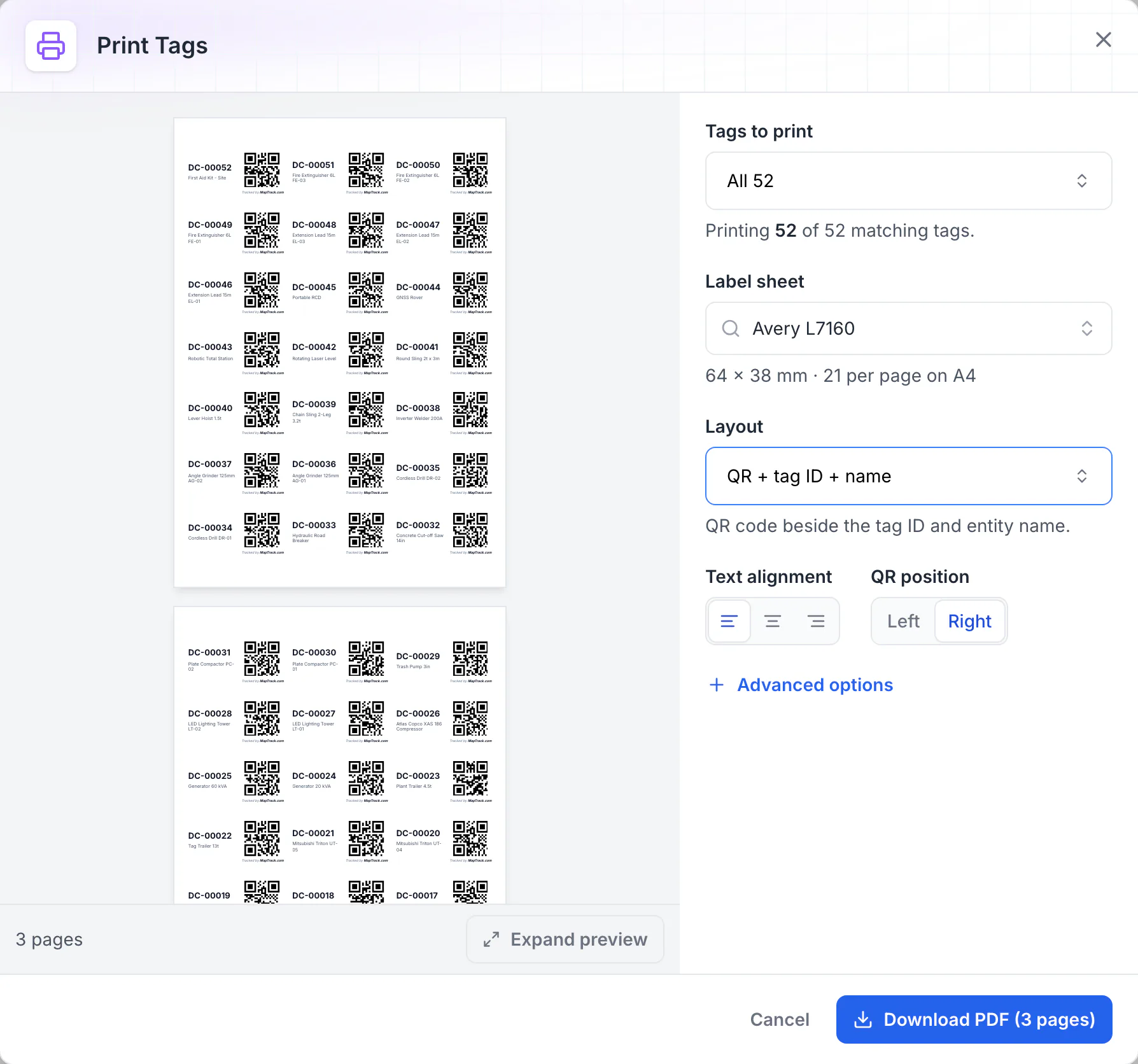
Print Tags lays QR labels out on standard label stock. Here all 52 tags fill three A4 sheets of 64 x 38 mm labels, each with the QR code beside the tag ID and asset name, ready to download as a PDF and print.
MapTrack app · Demonstration data · Captured
About this screenshot
Captured in a demonstration workspace with the Avery L7160 sheet and the QR + tag ID + name layout chosen. Each QR code holds the tag ID printed beside it.

Co-Founder & GM of Operations
Trusted by construction, mining and field service teams













What we track
Assets teams track with QR codes
QR labels suit assets that people identify during field workflows. Confirm the device, provider, delivered location or telemetry fields and rollout scope.
- Power tools & hand tools
- Test & measurement equipment
- Ladders, scaffolding & access gear
- Lifting gear, slings & rigging
- Safety equipment (harnesses, PPE)
- IT & AV equipment
- Pumps, compressors & small plant
- Kits, cases & consumable stock
- Fixtures, furniture & facilities assets
- Fire equipment & first-aid stations
- Attachments & machine buckets
- Vehicle & trailer asset records
The challenge
Why spreadsheet and paper registers fail in the field
Asset registers kept in spreadsheets and on paper decay the moment gear starts moving. Nobody updates a spreadsheet from a trench, so the register drifts from reality until audits, compliance checks and replacement decisions are running on fiction.
The register is always out of date
Spreadsheets rely on someone typing in what happened in the field. A QR code makes the asset record easier to open, while the user still completes the intended connected action when an asset moves.
No custody trail when assets go missing
When a tool disappears, a spreadsheet may not show its last recorded assignee or location. Deliberate assignment, return, transfer and audit actions create a clearer operational record.
Audits and stocktakes take days
Counting assets against a printout is slow and error-prone, so audits happen rarely and losses compound between them. Bulk QR scanning verifies a van, storeroom or site in one pass.
Compliance evidence lives everywhere except the asset
Test-and-tag records, submitted forms and certificates can sit in filing cabinets and inboxes. Linking them to the asset gives authorised users a more consistent place to retrieve the available evidence.
You buy gear you already own
When nobody can find an asset, the fastest fix can be buying another one. A maintained register and deliberate custody records can help teams check recorded ownership and location before purchasing a duplicate.
One platform
Label it, scan it and open the connected asset record
MapTrack connects QR identification to available custody, inspection, maintenance and audit actions on the asset record.
Scan with a compatible device
QR labels and supported existing external barcodes can be scanned with a compatible phone camera. A scan identifies the asset. Assignment, return, transfer and audit actions are deliberate connected steps.
Explore scan with a compatible deviceSupported records on the asset
Keep supported forms, documents, service history and deliberate custody actions with the asset record. Access depends on the user role and available connection.
Explore supported records on the assetQR records with GPS scope confirmed
Confirm the device, provider, delivered location or telemetry fields and rollout scope.
Explore QR records with GPS scope confirmedScan & assign
Check-in, check-out and audits from supported devices
Scan a QR label on a supported phone or tablet to identify the asset, then complete the intended assignment, return, transfer or audit action. Assignments use supported people and locations rather than crew- or project-scoped entities.
- Scan with a supported phone or tablet
- Record deliberate assignment and return actions
- Assign assets to supported people or locations
- Use audit sessions for asset verification
- Connected custody and audit actions need a connection
Inspections
Pre-starts and inspections attached to the scan
A QR scan is a natural moment to inspect. Crews can identify the asset and complete the relevant form with photos, signatures and timestamps. A failed submission doesn’t create follow-up work by default. Configure and test any task or work-order automation before rollout.
- Mobile pre-start and inspection forms on scan
- Photos, signatures and timestamps for evidence
- Selected results can feed configured follow-up
- Test-and-tag and calibration records on the asset
- Evidence visibility follows the user role
Maintenance
Service history on the asset record
Keep work orders and recorded service history with the asset that its QR code identifies. Choose and test the schedule trigger and manual, per-asset automatic or batch generation mode. Inspection results only create follow-up through a configured automation.
- Loaded work orders can be completed in the field
- Service schedules can use time or meter triggers
- Record time and costs against work orders
- Configure notification email to selected Person records
- Scan to identify the asset and open available history
Label planning
Test the label and scan workflow before rollout
Choose a QR label material, adhesive, size and placement for the asset and environment. Test representative items for scan reliability and durability before ordering a wider batch.
You can use the label designer for print-ready QR layouts. Confirm current pricing, plan inclusions, user entitlements, trial and subscription terms directly with MapTrack before relying on them.
Material
match the asset environment
Placement
test scan access in the field
Linking
validate each code and asset record
Pilot
test before wider rollout
Put a QR code on it and stop guessing
Label assets, identify them from a supported device and open connected custody, inspection and maintenance actions from one register.
- 30-day trial
- No credit card required
- Confirm current plan scope
Get started
How teams roll out QR asset tracking
Setup depends on data quality, labels, workflows and team size. Start with one asset class or site, test one field workflow, then expand.
Import your asset register
Import supported asset fields from a spreadsheet or create records individually. Validate the data before linking labels or configuring workflows.
Label your assets
Choose, test and attach QR labels, then validate that each code opens the intended asset record on the devices your team will use.
Turn on your first workflow
Start with one assignment and return flow, pre-start form or audit session. Confirm roles, connection requirements and expected records before expanding.
Roll out to the whole team
Confirm current pricing, plan inclusions, user entitlements, trial and subscription terms directly with MapTrack before relying on them. Use the documented workspace roles and test the required site, division or contractor access before rollout.
Key features for QR code asset tracking
Documented QR, asset, form, maintenance and audit capabilities for the rollout.
Field-proven
The register only works if the field updates it
A QR scan opens the asset record, then the user completes the intended connected action. A scan identifies the asset. Assignment, return, transfer and audit actions are deliberate connected steps.
Frequently asked questions
Common questions about QR code asset tracking from operations and field teams.
QR asset tracking resources
Guides, tools and templates for planning and rolling out QR code asset tracking.
14-day QR rollout plan
A practical two-week plan for taking a team from spreadsheet register to live QR tracking.
Explore 14-day QR rollout planQR code asset tracking setup guide
Step-by-step setup: choosing labels, structuring your register and building scan habits.
Explore QR code asset tracking setup guideFree asset register template
Start with a structured register template, then map its supported asset fields into MapTrack.
Explore free asset register templateLabel designer
Design and print your own QR labels free, in standard sizes for tools and plant.
Explore label designerContractor tool tracking
How contractors assess QR identification and custody actions across people, vans and locations.
Explore contractor tool trackingTool theft prevention
Strategies and systems to reduce tool theft and loss on construction and trade sites.
Explore tool theft preventionExplore
- Pricing
- Book a demo
- MapTrack vs Asset Panda
- Alternative to Asset Panda
- Alternative to spreadsheets
- QR tracking
- Asset tracking
- Construction
- Vehicle pre-start checklist
- Hardware store
Other industries we serve
- Construction
- Civil contractors
- Plumbing contractors
- Electrical contractors
- HVAC contractors
- Landscaping
- Building services
- Mining and resources
- Oil and gas
- Industrial maintenance
- Facilities services
- Fleet and transport
- Government and councils
- Manufacturing
- Energy and utilities
- Infrastructure
- Education
- IT assets
- Aviation
- Fire safety and protection
- Agriculture
- Transport and logistics
- Water utilities
Each labelled asset, one scan away
Use QR identification to open connected custody, inspection and maintenance actions on each asset. Confirm current pricing, plan inclusions, user entitlements, trial and subscription terms directly with MapTrack before relying on them.
QR tracking · QR labels · Asset tracking · Equipment checkout · vs Spreadsheets